Whole-house battery backup and generator transfer switches in Seattle and Puget Sound
Three tiers cover most Puget Sound homes. A generator inlet with a panel interlock, or a six-circuit manual transfer switch, runs $1,200–$3,000. An EcoFlow Smart Home Panel 2 with a Delta Pro Ultra battery runs $6,000–$15,000. A Tesla Powerwall 3 runs $13,000–$16,500. All three need an electrical permit and an inspection.
- Permitted & inspected
- Owner-run · WA Journey Level (01) + Electrical Administrator
- Licensed and bonded — verify # HBPOWPE758PO ↗ (opens in a new tab)
| Three tiers | Generator inlet with interlock or a six-circuit manual transfer switch $1,200–$3,000; EcoFlow Smart Home Panel 2 with a Delta Pro Ultra $6,000–$15,000; Tesla Powerwall 3 $13,000–$16,500 As of September 2026 |
|---|---|
| Permit | Required, and the contractor buys it before work starts (WAC 296-46B-901). Seattle SDCI, Tacoma Power, the city or Washington L&I, depending on the address. |
| L&I permit fee | $109.90 for a generator with transfer equipment up to 100 A As of July 2026 |
| PSE Flex batteries | $75 per kWh up to $1,000 per battery, plus up to $500 per battery per year. Tesla, Enphase, FranklinWH and SolarEdge only. As of September 2026 |
| Circuits backed up | Twelve branch circuits on an EcoFlow Smart Home Panel 2; six on a Nature's Generator manual transfer switch |
| Installed so far | Two EcoFlow Smart Home Panel 2 systems with Delta Pro Ultra batteries, one generator inlet with a panel interlock, one six-circuit manual transfer switch. No Powerwall 3 or standby generator on file yet. As of September 2026 |
Why the lights go out here in the first place
Puget Sound outages are a wind-and-trees problem more than a grid-capacity problem. Windstorm season runs from roughly October through January, and the lines on most residential streets sit beneath tall second-growth conifers now well above the wires. One Douglas fir across a primary drops an entire feeder, and utilities restore the largest feeders first. That is why a wooded cul-de-sac is often among the last addresses back, and why multi-day events happen here in a way they do not in denser, undergrounded neighborhoods.
Before picking equipment, write down the circuits you actually need: the furnace or heat pump air handler, the refrigerator, a well pump, the network gear, and a few lights and receptacles. That list sets the tier.
How the options compare
| Option | Backed-up loads | Transfers | What limits it |
|---|---|---|---|
| Generator inlet with a panel interlock | Any circuit in the panel, to the generator’s rating | By hand | Fuel on hand |
| Six-circuit manual transfer switch | Six circuits chosen in advance | By hand | Fuel on hand |
| EcoFlow Smart Home Panel 2 with a Delta Pro Ultra | Twelve circuits on the smart panel | Automatic | Battery capacity; recharges from grid, generator or solar |
| PSE Flex-eligible battery | Loads on a protected backup subpanel | Automatic | Battery capacity; recharges from grid or solar |
| Standby generator with an automatic transfer switch | The backup subpanel, or the whole panel | Automatic | Gas supply |
Option 1: a generator inlet with an interlock, or a six-circuit transfer switch
The cheapest permanent answer. An inlet box goes on an exterior wall, conduit runs to the panel, and a backfeed breaker gets a mechanical interlock plate: a metal slide that makes it physically impossible to have the main breaker and the generator breaker on at once. You roll out a portable generator, plug in, open the main, switch on the circuits you want, and refuel it as the outage runs. Fuel is the only thing limiting runtime.
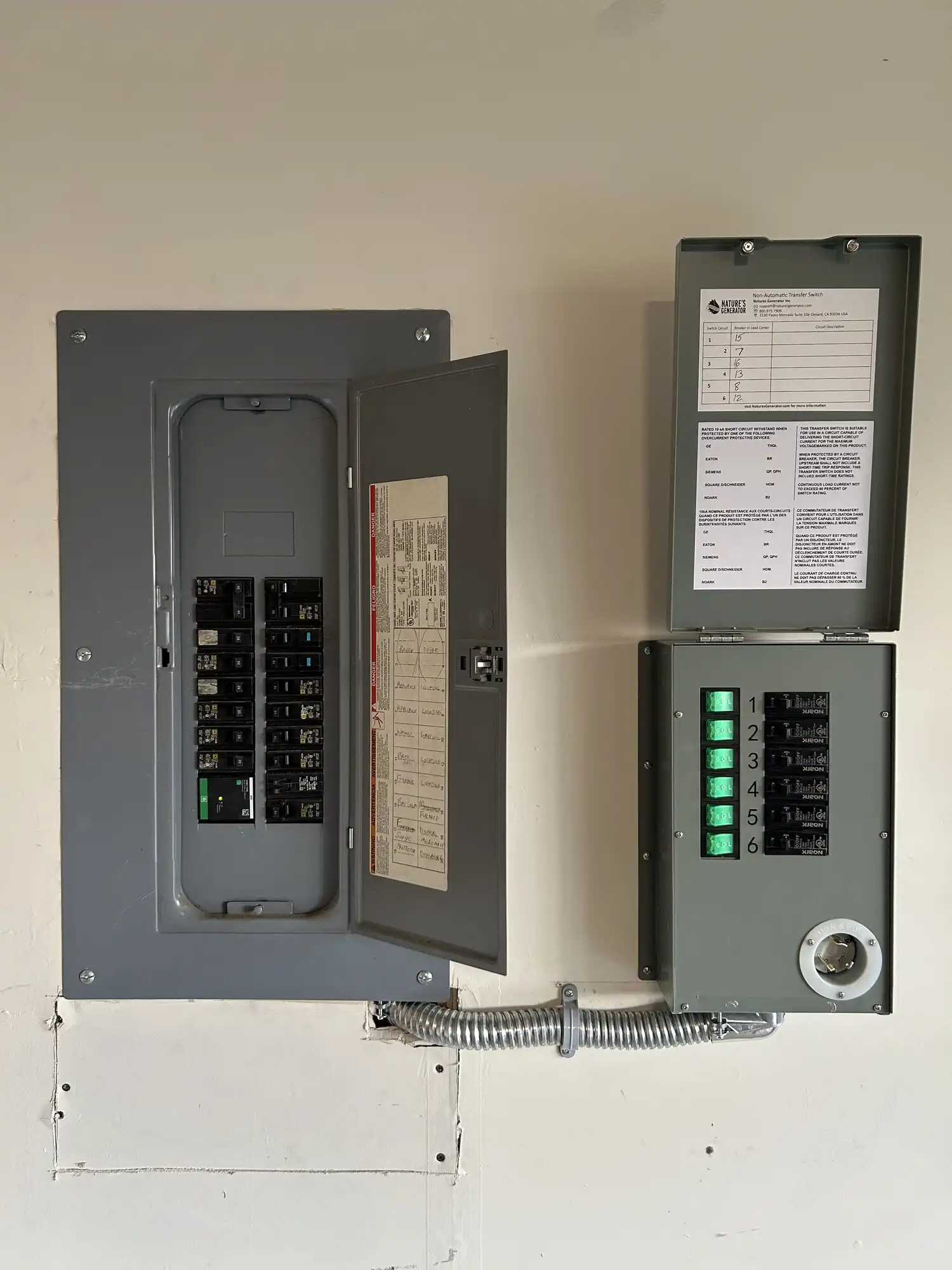
One constraint decides this tier: interlock kits are panel-specific. They are listed by panel brand and catalog number, and some panels, older load centers in particular, have no listed kit at all. Then the answer is a manual transfer switch wired to a fixed set of circuits. The Issaquah job below is a Nature’s Generator six-circuit non-automatic transfer switch, flex conduit to the main panel, circuits picked off the panel directory before anything was cut in.
Option 2: EcoFlow Smart Home Panel 2 with a Delta Pro Ultra
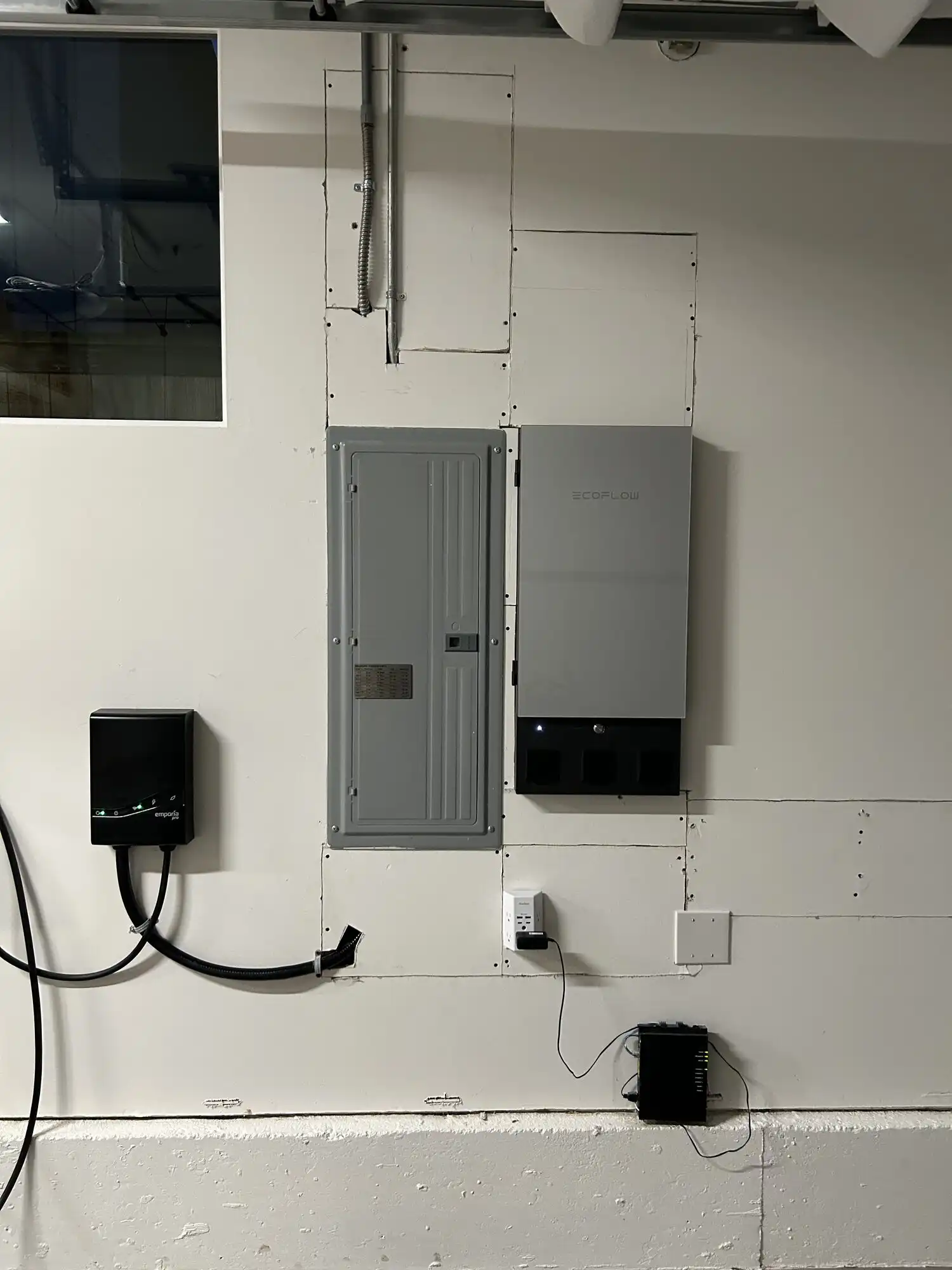
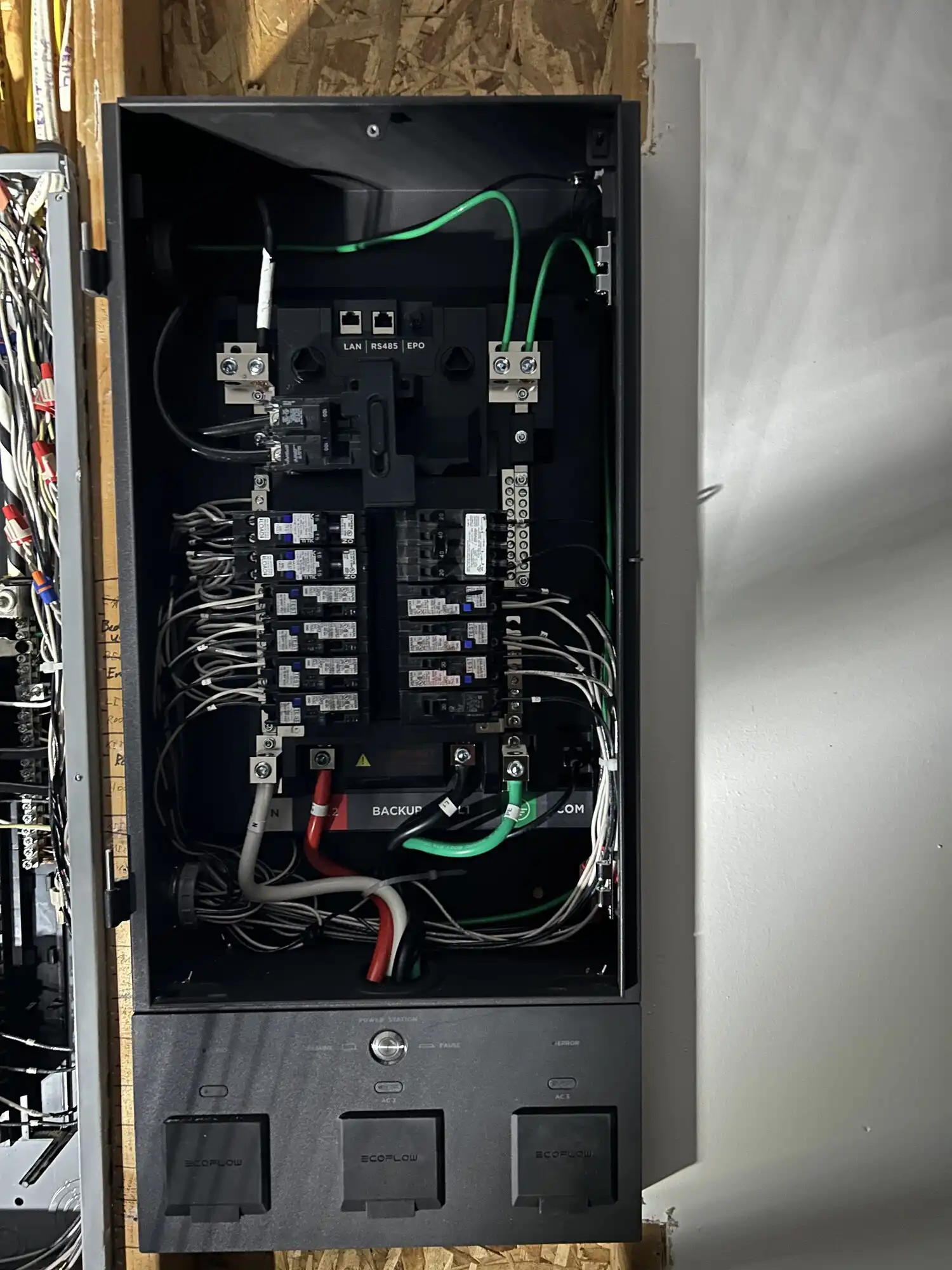
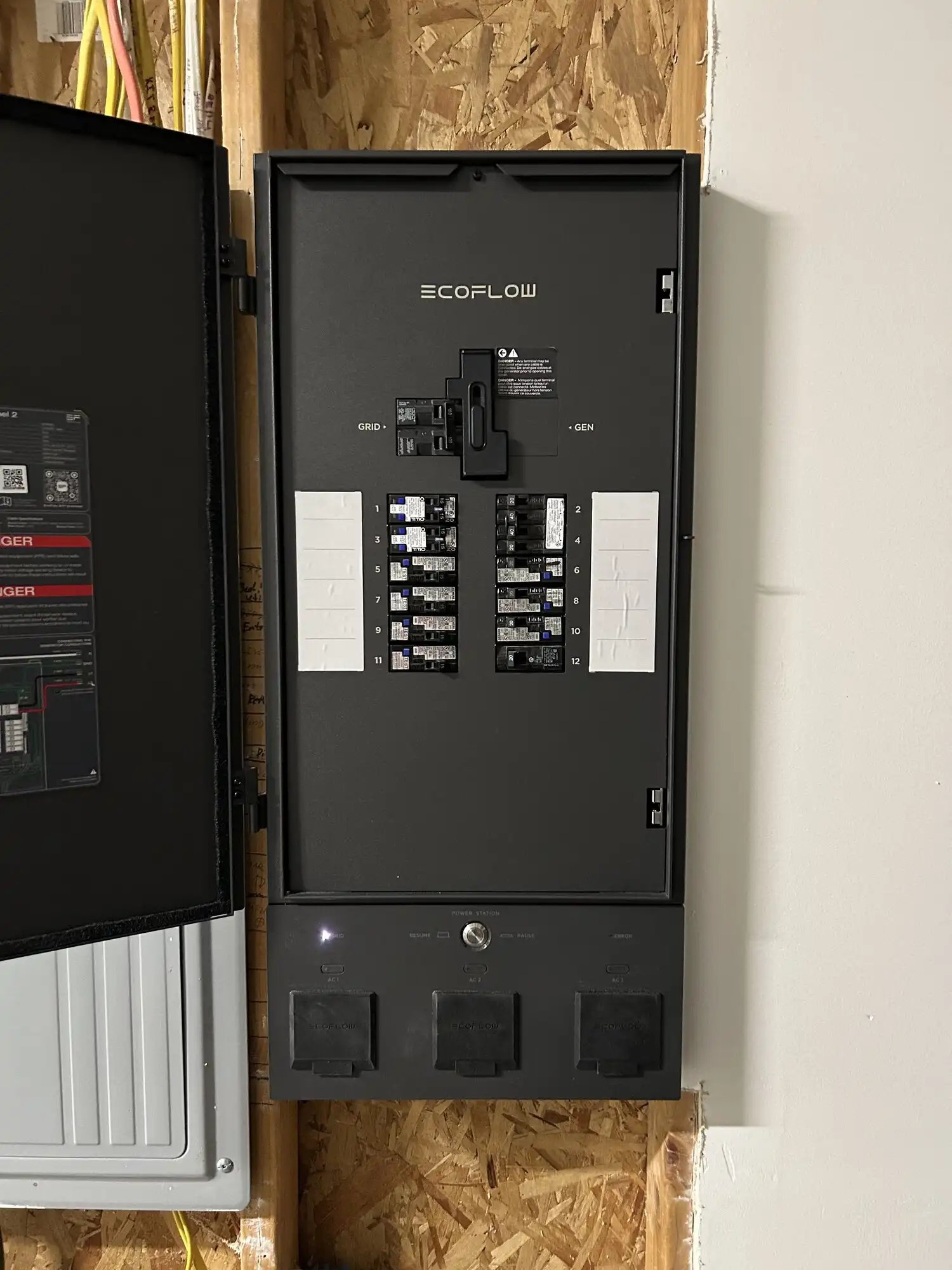
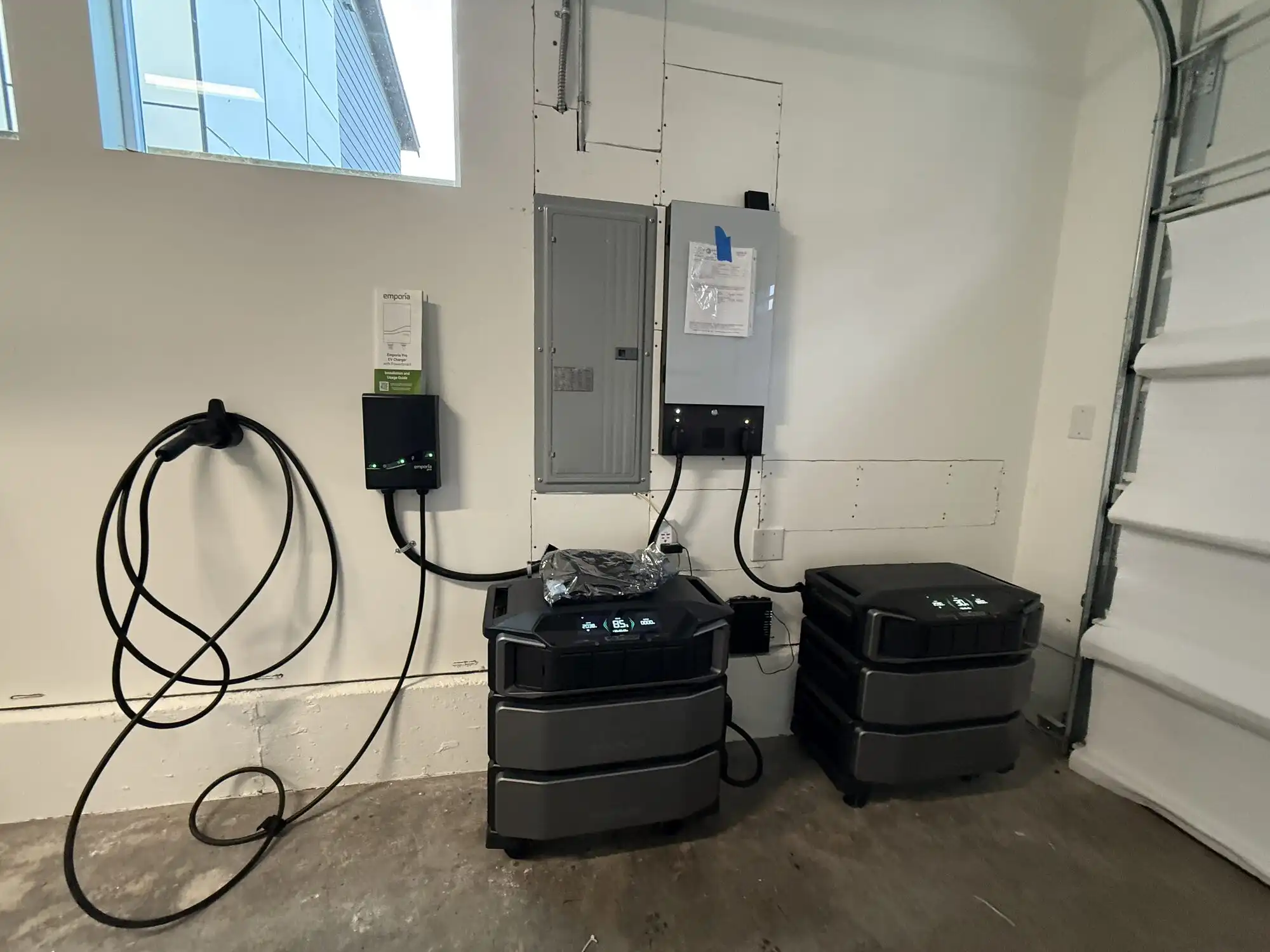
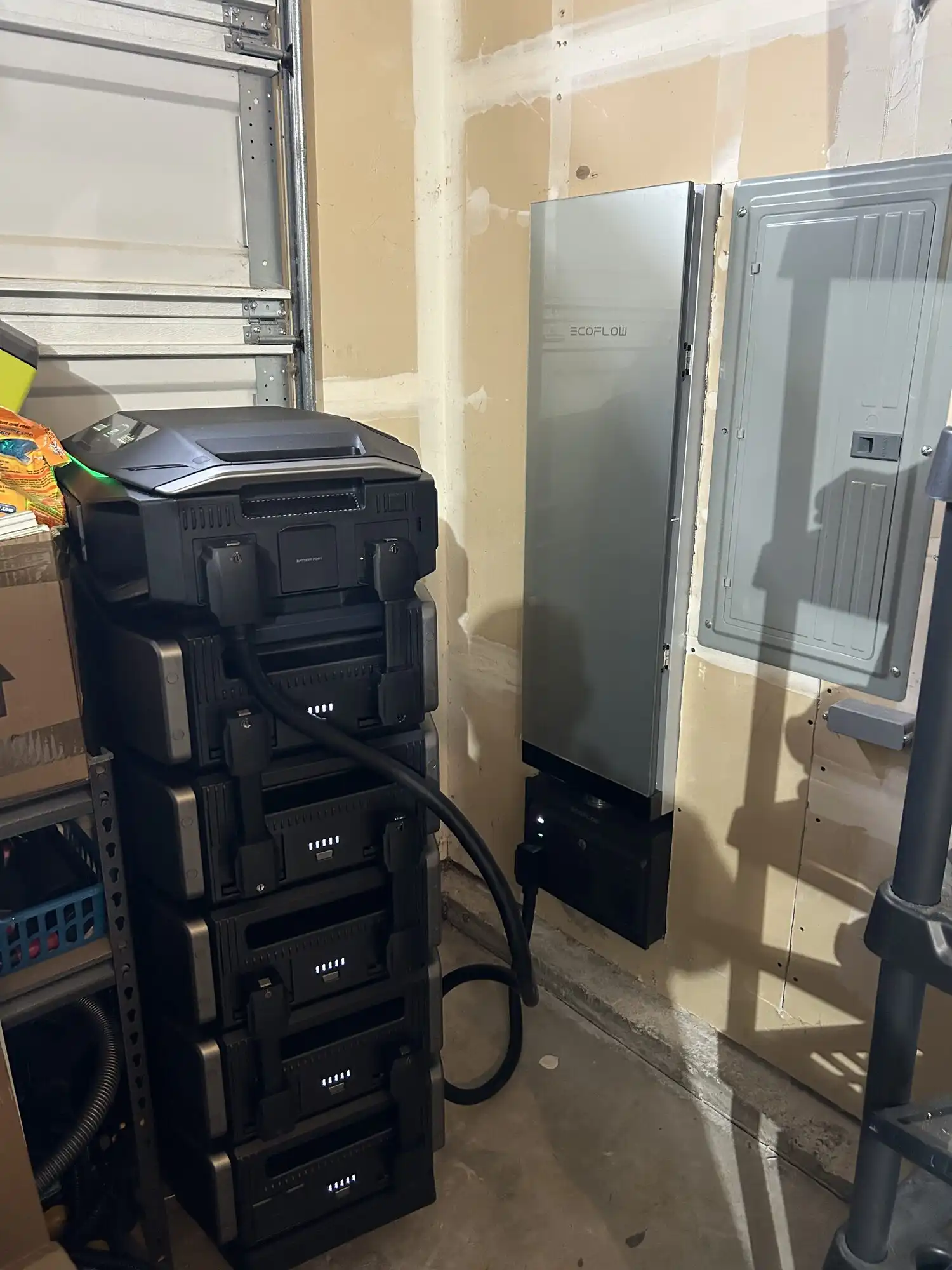
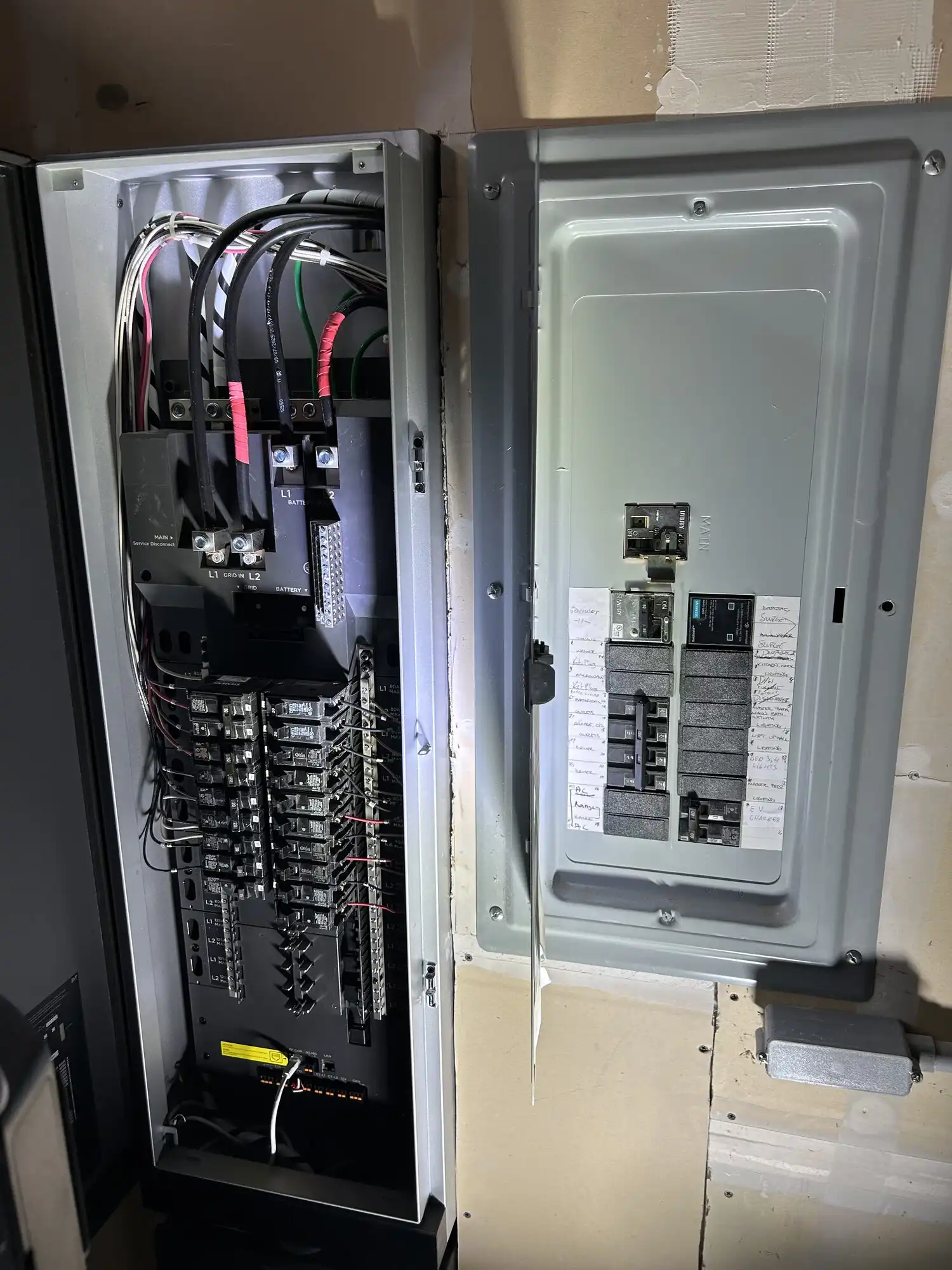
This is the system we have put in twice. The Smart Home Panel 2 mounts beside the existing load center and takes twelve branch circuits onto relay modules, with separate grid and generator inputs and a communications section carrying LAN, RS485 and EPO terminals. Delta Pro Ultra inverter and battery stacks sit on the floor and connect back to the panel’s base. When the grid drops, the panel transfers those twelve circuits by itself. Nobody has to be home.
Both are in the gallery. In Seattle in December 2025 the smart panel went in over a new 100 A subpanel, alongside a 50 A generator inlet with an interlock and a 60 A EV charger circuit, so the house can ride on battery, on a generator, or both. In Puyallup that same month a Delta Pro Ultra inverter went on four stacked battery modules.
Twelve circuits is not a forty-space panel. A large continuous draw, an EV charging at 48 A, a resistance water heater, a hot tub, either stays off the backed-up side or gets scheduled around. Choosing the twelve is the real design work.
Option 3: PSE Flex-eligible batteries, and the trade-off nobody mentions
Puget Sound Energy serves Bothell, the Eastside, most of south King County and Pierce County outside Tacoma. Its Flex programme is the only battery incentive on this corridor as of September 2026; Seattle City Light, Snohomish County PUD and Tacoma Power pay nothing for storage, so in Seattle or Tacoma the choice comes down to hardware. The eligible brands, the amounts and the pre-approval requirement are on the incentive table on this page.
EcoFlow is not eligible. Make that trade deliberately: EcoFlow is the lower-cost, modular route with no incentive attached, while a Powerwall 3 or a FranklinWH costs more up front and can earn the enrollment rebate plus the annual demand-event payments. PSE sets conditions on who installs the equipment, so settle that before counting the money.
We have not installed a Powerwall 3 or a FranklinWH, and there is no photo of one here.
Storage on a small commercial meter
Behind a commercial meter the math changes, because the Section 48E investment tax credit covers 30% of installed cost and runs through 2033. It applies to commercial energy storage, not to a house. We do not give tax advice, so ask your tax advisor whether your project qualifies. The electrical work keeps the same shape: a protected subpanel, a transfer point, and a load study.
Who issues the permit, and what the line item costs
WAC 296-46B-901 puts the electrical permit on the contractor, not on you, and it is bought before work starts. Which office issues it depends on the address: Seattle SDCI inside Seattle, Tacoma Power inside Tacoma, several Eastside and Snohomish cities that run their own electrical permitting, and Washington L&I everywhere else. The FAQ on this page names which is which.
Where L&I is the authority the fee schedule is public. Effective 1 July 2026, a generator with transfer equipment up to 100 A is $109.90. A first panel with up to five circuits is $100.50, and each additional circuit is $8.20. Those are pass-through figures with their own line on the quote.
What is in the gallery, and what is not
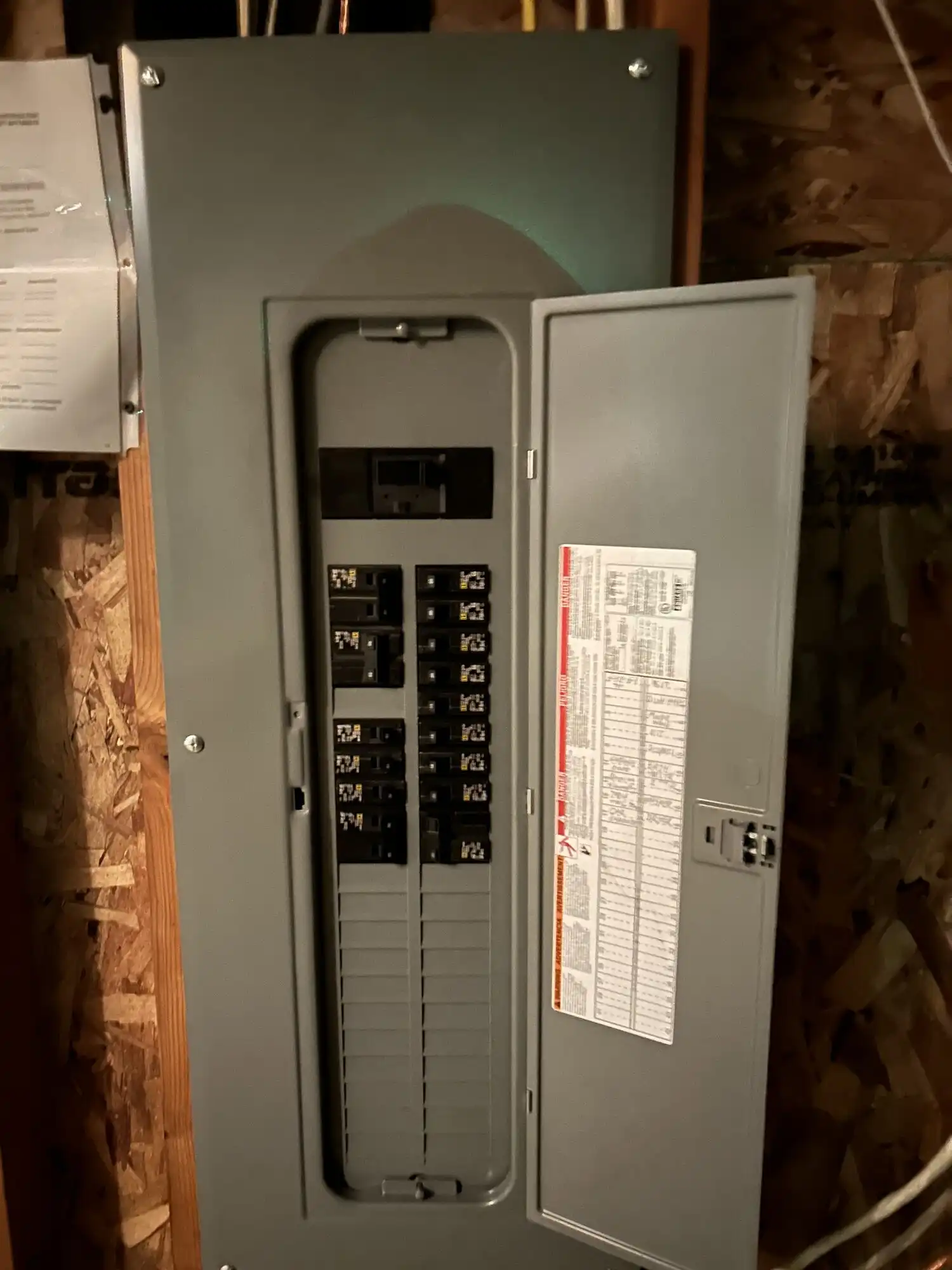
Two EcoFlow Smart Home Panel 2 systems, Seattle and Puyallup, both December 2025, and the Issaquah manual transfer switch from August 2026. The Kent photo is a panel replacement, not a backup job. It is here on purpose: plenty of backup projects start with an old load center that has no spare double-pole slot for a backfeed breaker.
What it costs
| Work | Typical range | What moves the price |
|---|---|---|
| EcoFlow Smart Home Panel 2 with a Delta Pro Ultra battery | $6,000–$15,000 | Number of battery modules, how many circuits move onto the smart panel, and whether a subpanel is added. |
| Tesla Powerwall 3, installed | $13,000–$16,500 | Labor runs $3,000–$6,100 of that; a backup subpanel adds $400–$1,750. Powerwall is one of the brands eligible for the PSE Flex battery incentive. |
| Generator inlet with interlock, or a 6-circuit manual transfer switch | $1,200–$3,000 | Inlet location and conduit run, panel brand (interlock kits are panel-specific and some panels have none), and how many circuits move to the transfer switch. |
| Standby generator, installed | $10,000–$19,000 14 kW $10,000–$14,000; 18 kW $12,500–$17,000; 22 kW $14,000–$19,000 | Gas line sizing and the plumbing scope, pad and setback requirements, automatic transfer switch, and the electrical service size. |
Prices shown are typical ranges for the Puget Sound area as of September 2026, compiled from published industry and local contractor sources. Every job is quoted after a site visit or plan review. Permit fees, utility charges and equipment are itemized separately unless stated.
What the utility pays
Which utility serves the building decides what you can claim — not which city it is in. See every programme and its source.
| Utility | Programme | What it pays | Who qualifies |
|---|---|---|---|
| PSE | PSE Flex Batteries Apply before you buy the equipment. | $75 per kWh enrollment rebate up to $1,000 per battery, plus up to $500 per battery per year for demand events | Tesla, Enphase, FranklinWH and SolarEdge batteries installed by a PSE Recommended Energy Professional. Standalone batteries qualify. EcoFlow is not on the eligible list. Verified 5 September 2026 · source ↗ |
Utility incentives are set by Seattle City Light, Puget Sound Energy, Snohomish County PUD and Tacoma Power and change without notice. Figures were last verified on 5 September 2026. Most programs require pre-approval before equipment is purchased; HB Power Electric helps prepare applications but cannot guarantee approval or amounts.
Work we have photographed
Common questions
Interlock kit or manual transfer switch, which one do I need?
It usually comes down to your panel. An interlock kit is cheaper and lets you power any circuit in the panel, but kits are listed for specific panel brands and catalog numbers, and some panels have no listed kit at all. If yours does not, a six-circuit manual transfer switch is the alternative: you pick the six circuits in advance and they move as a group. Either way the generator is portable and you switch over by hand.
Does the EcoFlow Smart Home Panel 2 really back up a whole house?
It backs up twelve branch circuits, which covers a typical furnace or air handler, refrigerator, well pump, network gear, and a set of lights and receptacles. It is not a whole 200 A service. Large continuous loads such as an EV charger, a resistance water heater or a hot tub normally stay on the utility side. Choosing which twelve circuits move onto the panel is the main design decision, and it is worth settling before the equipment is ordered.
Do I need a permit for a generator inlet or a home battery in Washington?
Yes, and under WAC 296-46B-901 the electrical contractor buys it before work starts, not the homeowner afterwards. Who issues it depends on the address. Seattle SDCI permits and inspects inside Seattle, Tacoma Power handles Tacoma, the city does its own in Bellevue, Everett, Kirkland, Redmond, Sammamish, Lynnwood, Renton and Federal Way, and Washington L&I covers Bothell, Kenmore, Issaquah, Kent, Edmonds, Covington, Auburn and Puyallup. The fee and the inspection are listed separately on the quote.
Can I claim the PSE Flex battery rebate on an EcoFlow system?
No. PSE Flex lists Tesla, Enphase, FranklinWH and SolarEdge, and EcoFlow is not on that list as of September 2026. The program also needs pre-approval before the equipment is bought, and PSE wants the work done by a PSE Recommended Energy Professional, which is PSE's own roster. Ask where that stands before you build the incentive into a budget. If Seattle City Light, Snohomish County PUD or Tacoma Power serves you, none of them offer a battery incentive at all, so the question does not arise.
How long will a battery run my house during an outage?
That is sized, not guessed. It depends on the kilowatt-hours installed and on which circuits sit behind the backup panel, so a design starts with a load list and the number of hours you want covered, and the battery module count follows from it. For a multi-day windstorm many houses do better with a battery for the first night plus a generator inlet for refueling after that. The Seattle install below has both for exactly that reason.
Which circuits should I put on the backup panel?
Start with heat, food and communications: the furnace or heat pump air handler, the refrigerator, the internet and network gear, one or two lighting circuits and a few receptacles. Add a well pump or a sump pump where there is one. Leave the range, the dryer, the EV charger and any resistance water heater on the utility side unless you are willing to pay for a much larger system. We walk the panel directory with you before quoting.
Do you install standby generators?
The electrical scope, yes: the transfer switch, the feeder, the branch circuits, the permit and the inspection. But the gas line sizing, the pad and the setback clearances are a plumbing and site scope, and they are often most of the budget. We have not installed a permanently mounted standby generator, so there is no photo of one on this site. The range shown here is a published market anchor rather than one of our own jobs.
Tell us which circuits have to stay on
Send a photo of your panel directory and the list of loads you want covered. That is enough to price the tier that fits, before anyone visits.
We reply as soon as we are off the job — usually the same day.