Lighting installation in Bellevue and the Eastside, wired from the plan
HB Power Electric wires architectural lighting from a designer's or builder's plan in Bellevue, Sammamish and across the Eastside: pendant clusters set into soffits, backlit disc sconces, recessed stair and path lights, LED channel in millwork, and dimming zones. Millwork, cove and step packages run $5,000–$30,000 in this market. New circuits need an electrical permit before work starts.
- Permitted & inspected
- Owner-run · WA Journey Level (01) + Electrical Administrator
- Licensed and bonded — verify # HBPOWPE758PO ↗ (opens in a new tab)
| Typical range | $5,000–$30,000 for a millwork, cove and step LED package; $8,000–$25,000 for about twelve zones of dimming control As of September 2026 |
|---|---|
| Permit | Required for anything that adds a circuit, a box or a switch leg. Bellevue, Sammamish, Redmond and Kirkland issue their own; Seattle goes through SDCI; L&I permits Bothell, Kenmore and Issaquah. |
| Who this is for | Interior designers, custom builders and condo owners working from a fixture schedule and a reflected ceiling plan |
| What we need first | Fixture schedule, reflected ceiling plan, millwork shop drawings and driver cut sheets — before the cabinetry closes |
| Licence | Washington Electrical Contractor HBPOWPE758PO, specialty General (01), licensed and bonded As of September 2026 |
What we wire from a lighting plan
Architectural lighting is a trim trade with a rough-in problem. Nearly everything that goes wrong was settled months earlier, on the reflected ceiling plan or the millwork shop drawings. This is the scope HB Power Electric takes from a designer’s or builder’s package.
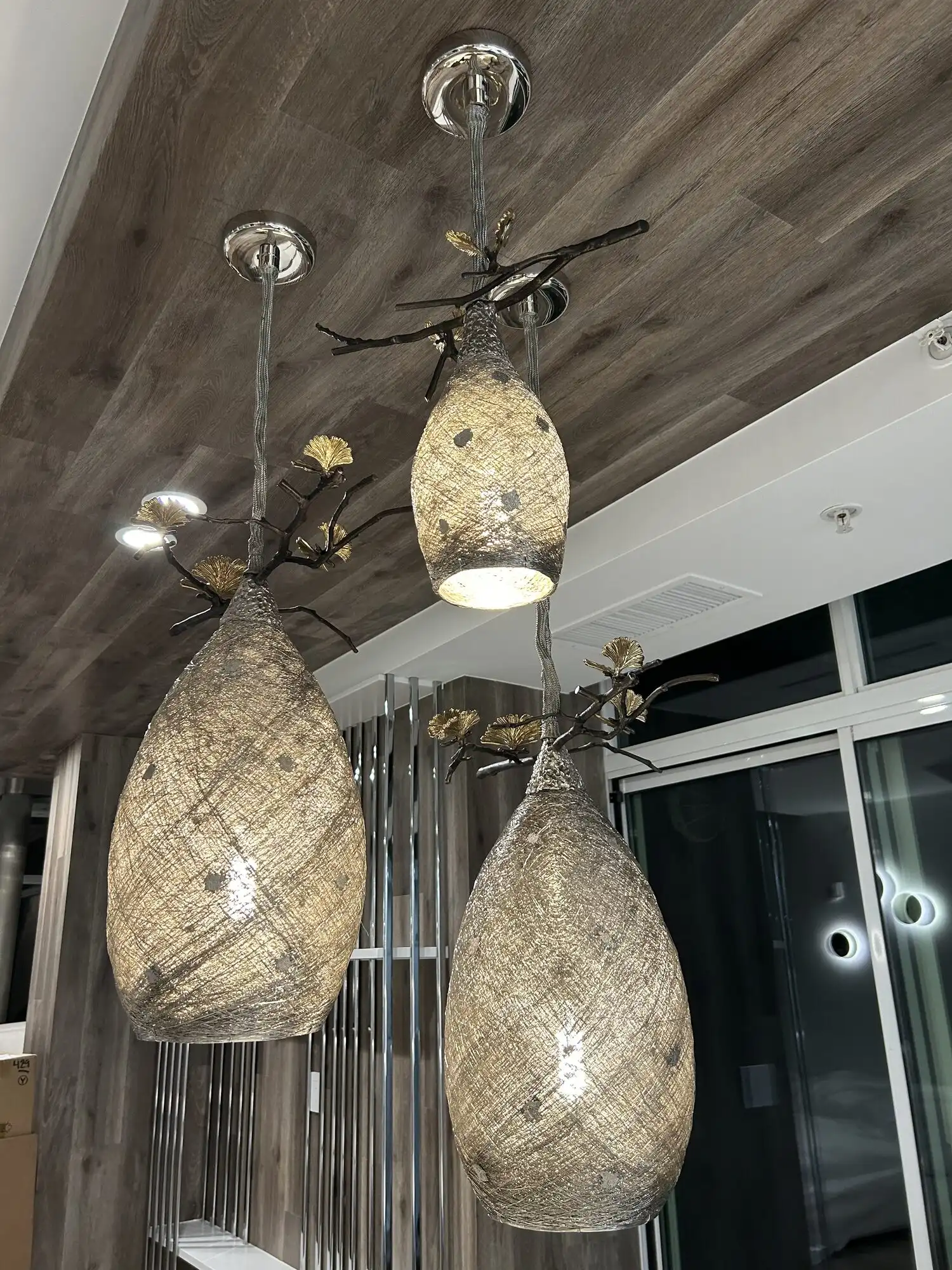
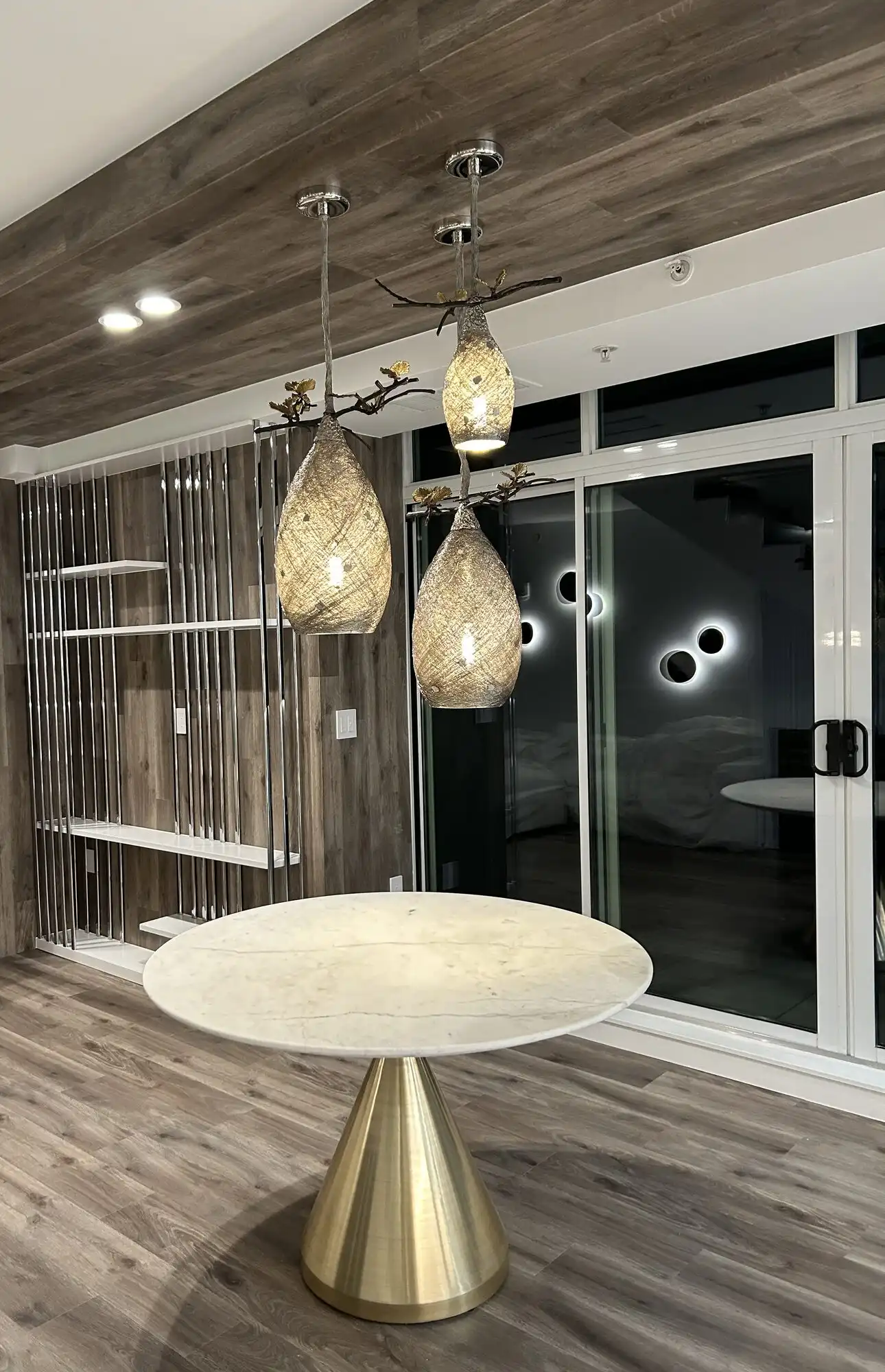
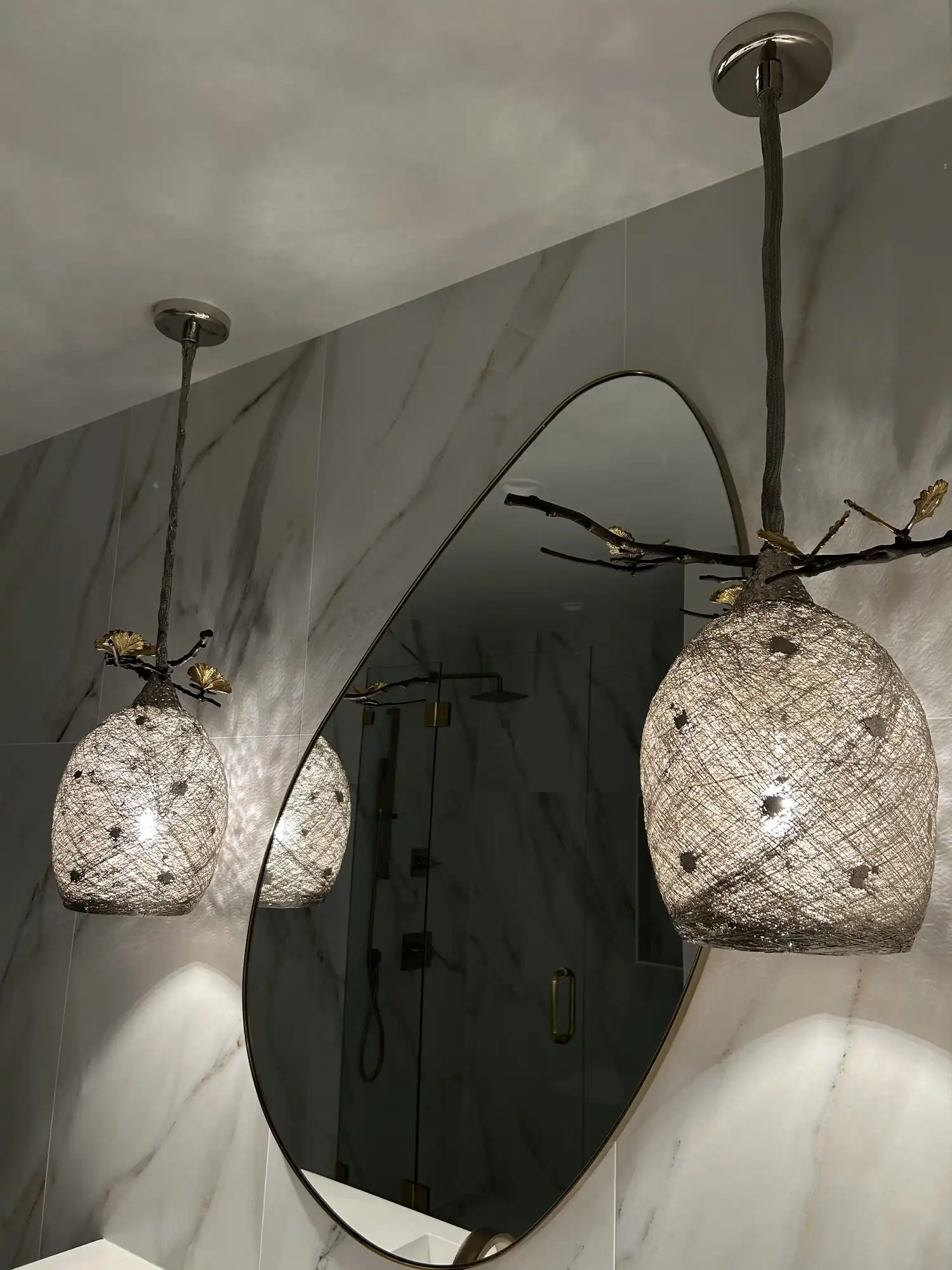
- Pendant clusters set into built soffits. Boxes cut into the soffit framing so the canopies line up on one axis, blocking that carries the fixture instead of the drywall, and cord lengths cut to the elevation rather than to whatever the box happens to be.
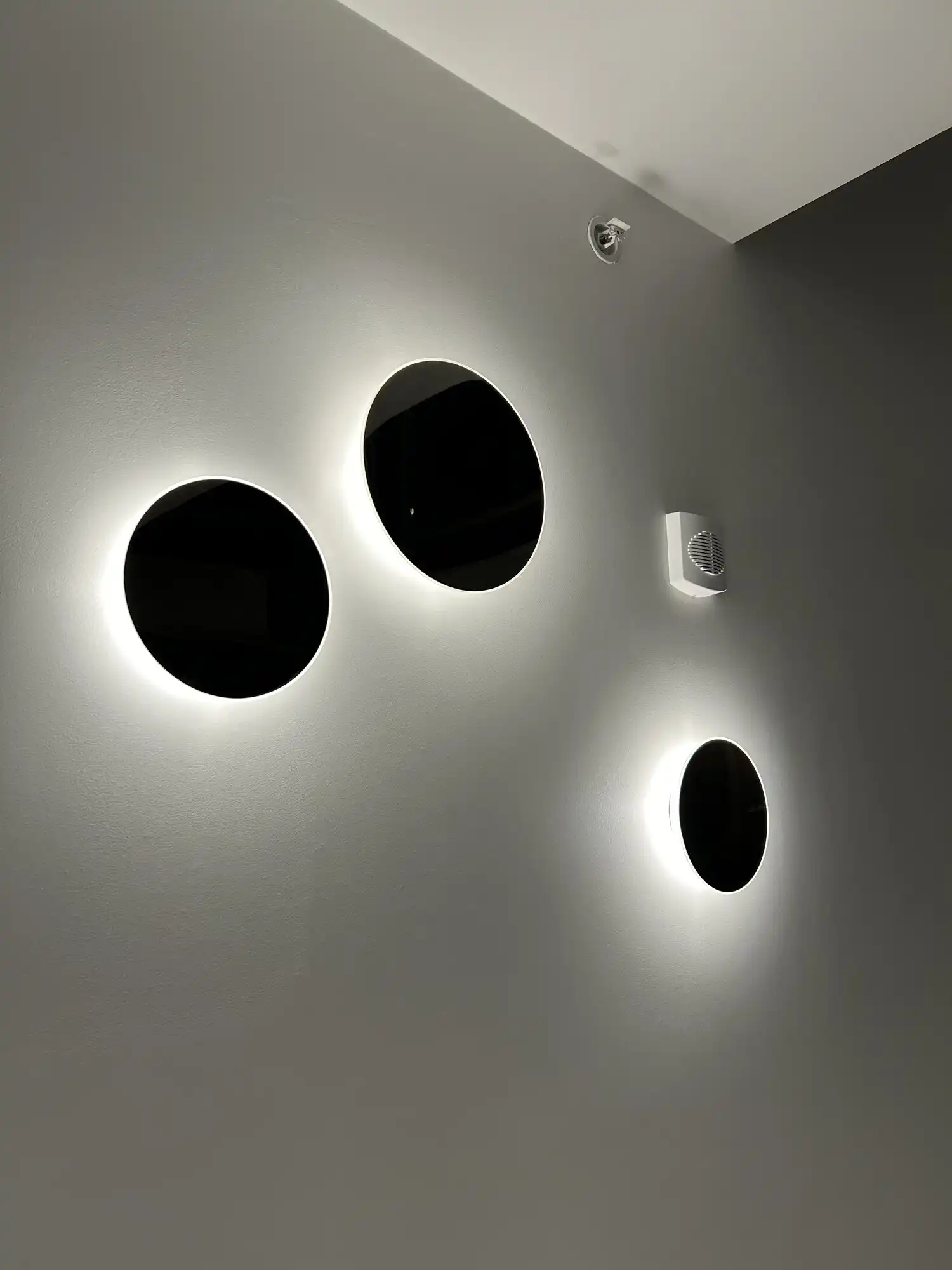
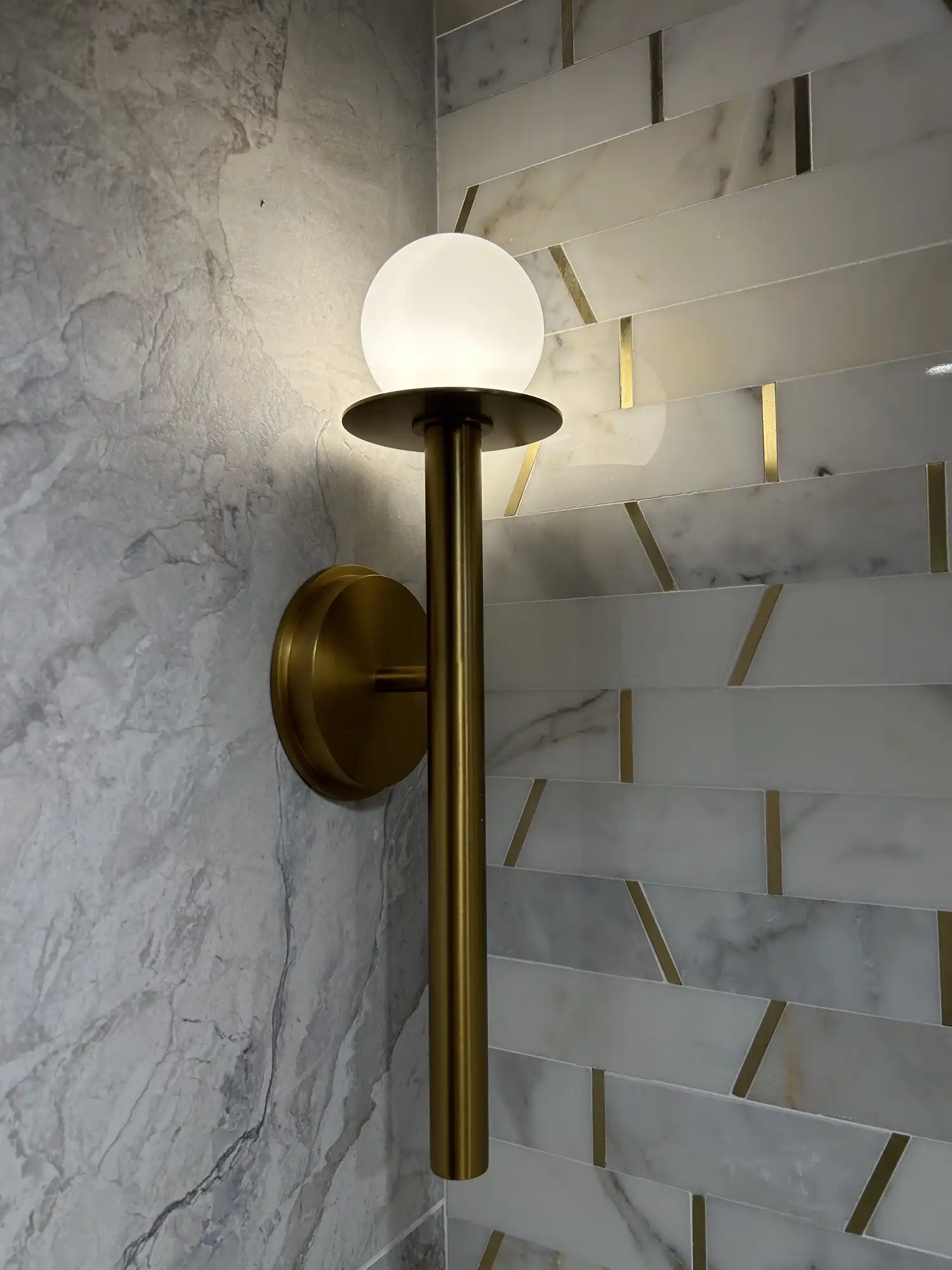
- Halo and backlit disc sconces. Each one needs wall blocking and a driver somewhere reachable, and both have to exist before the wall closes.
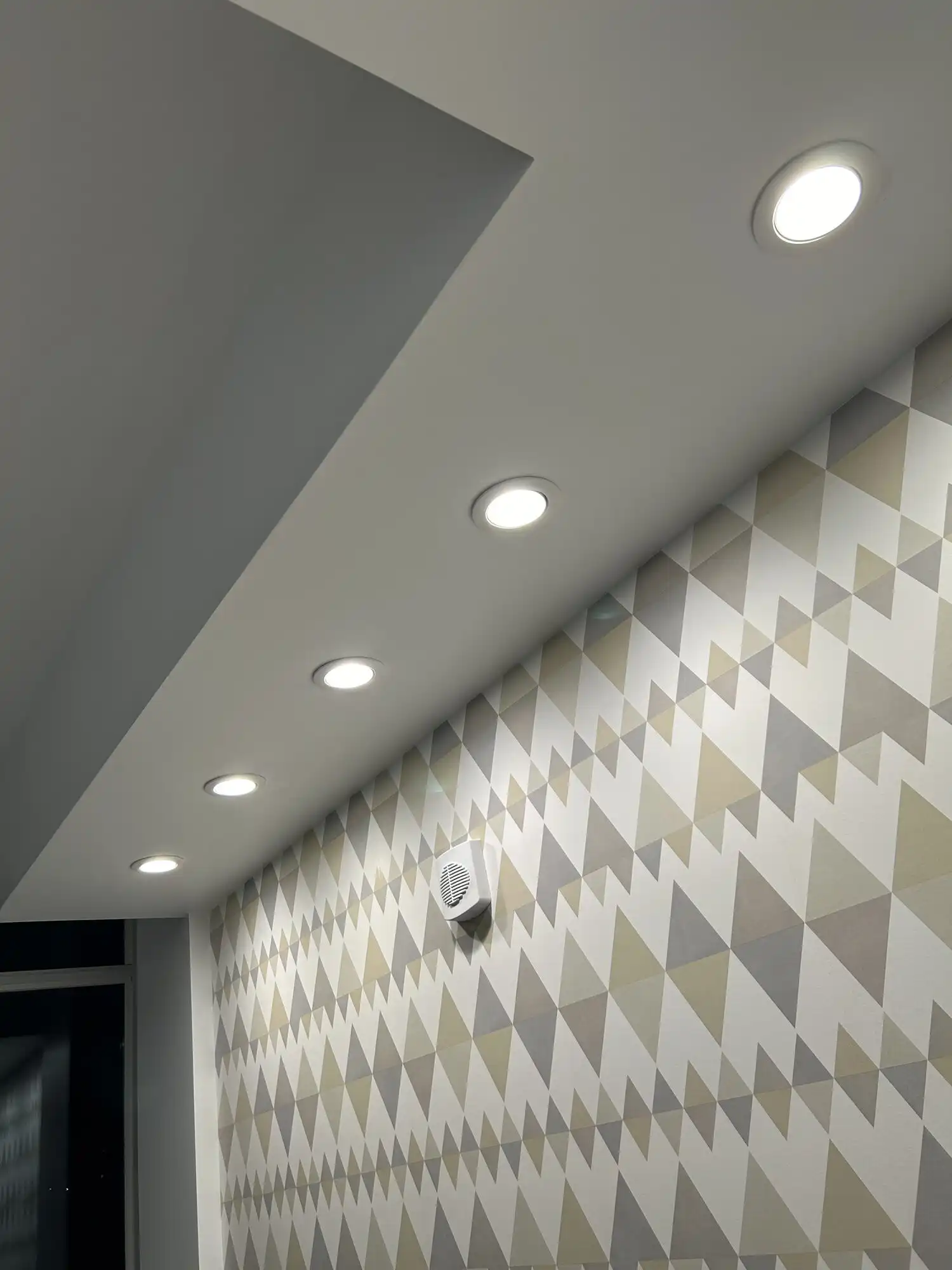
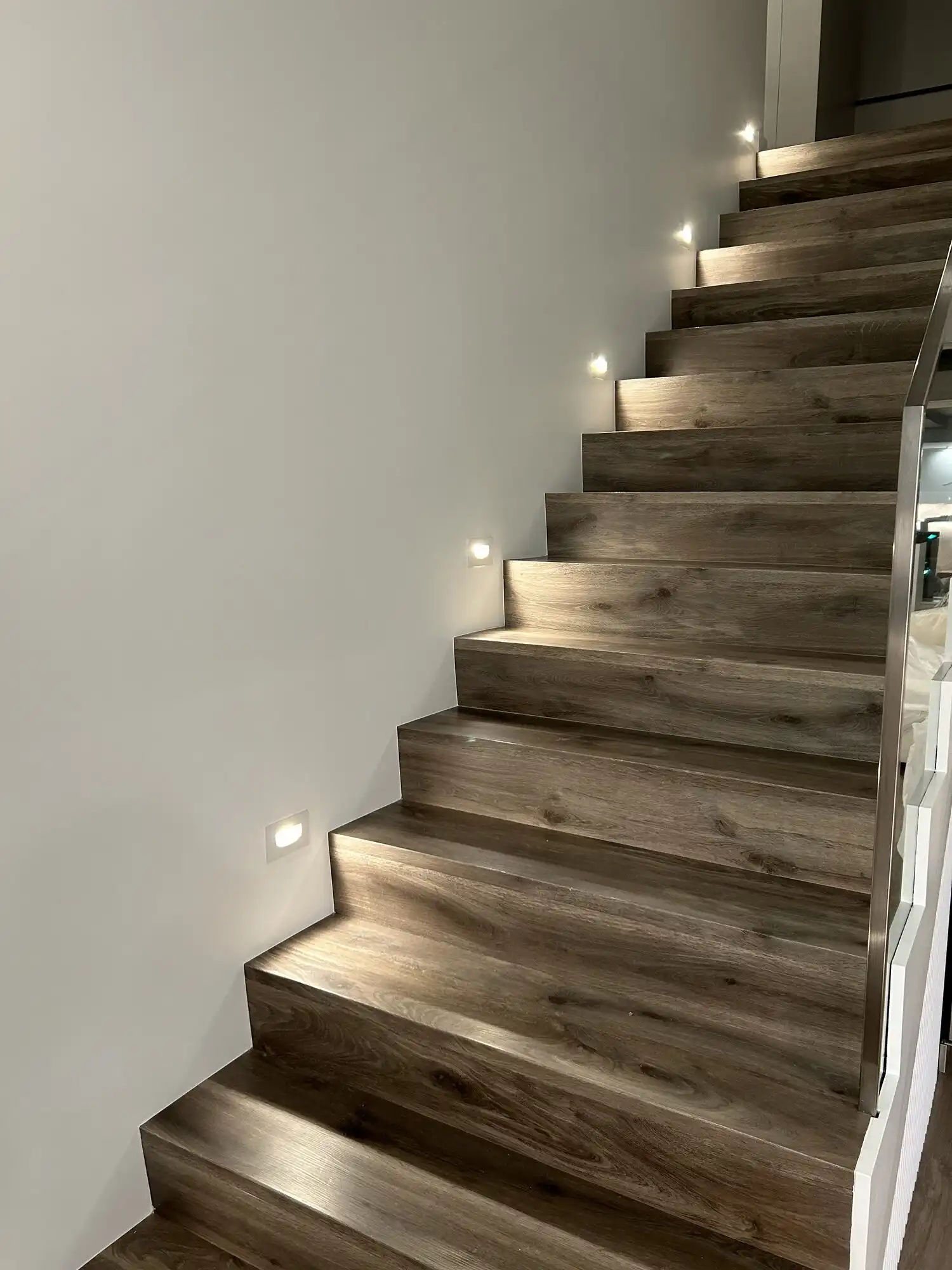
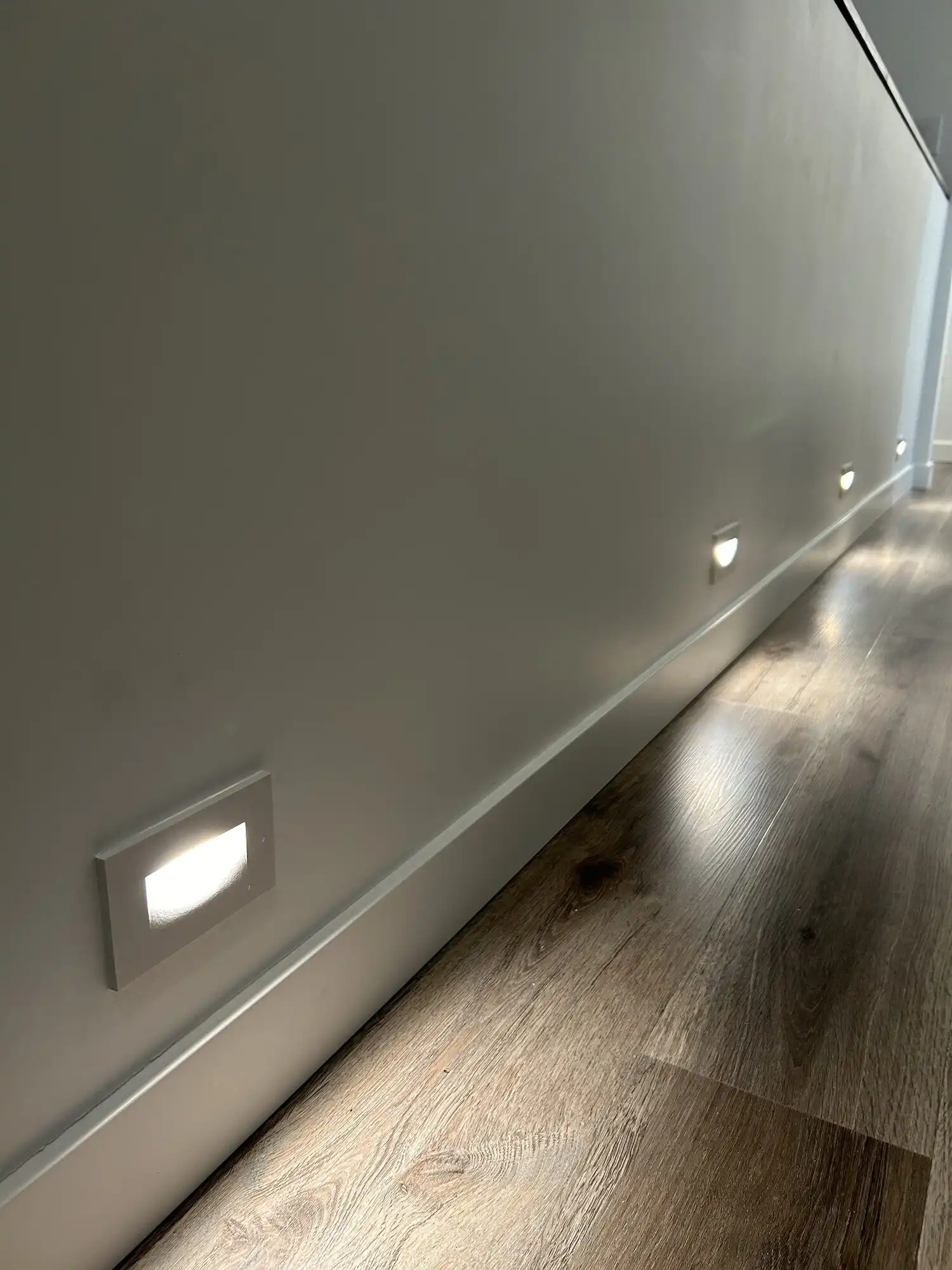
- Recessed stair and path lights. Set at a constant height above the tread or the finished floor, on their own switch leg, so a stair run dims independently of the ceiling above it.
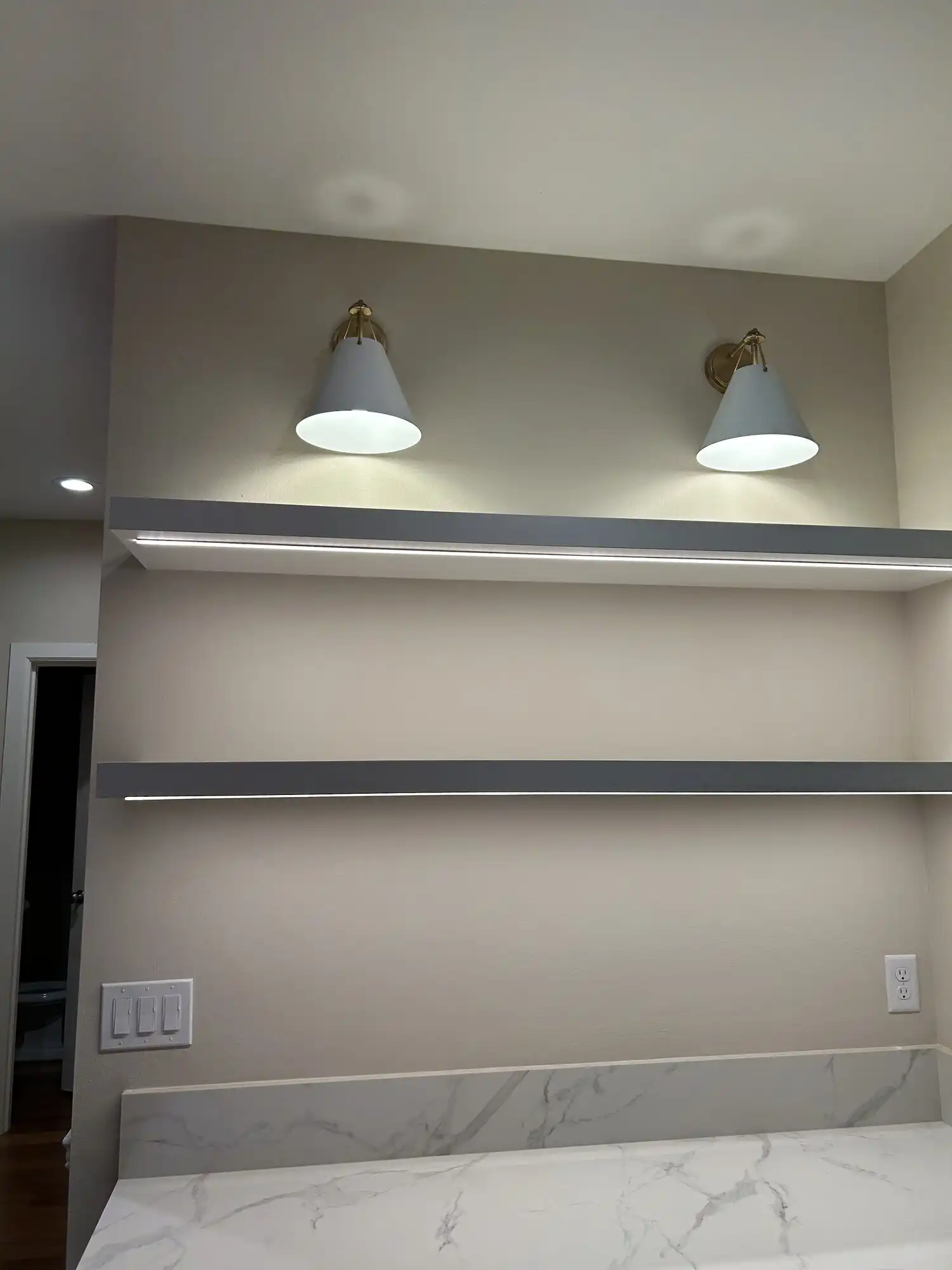
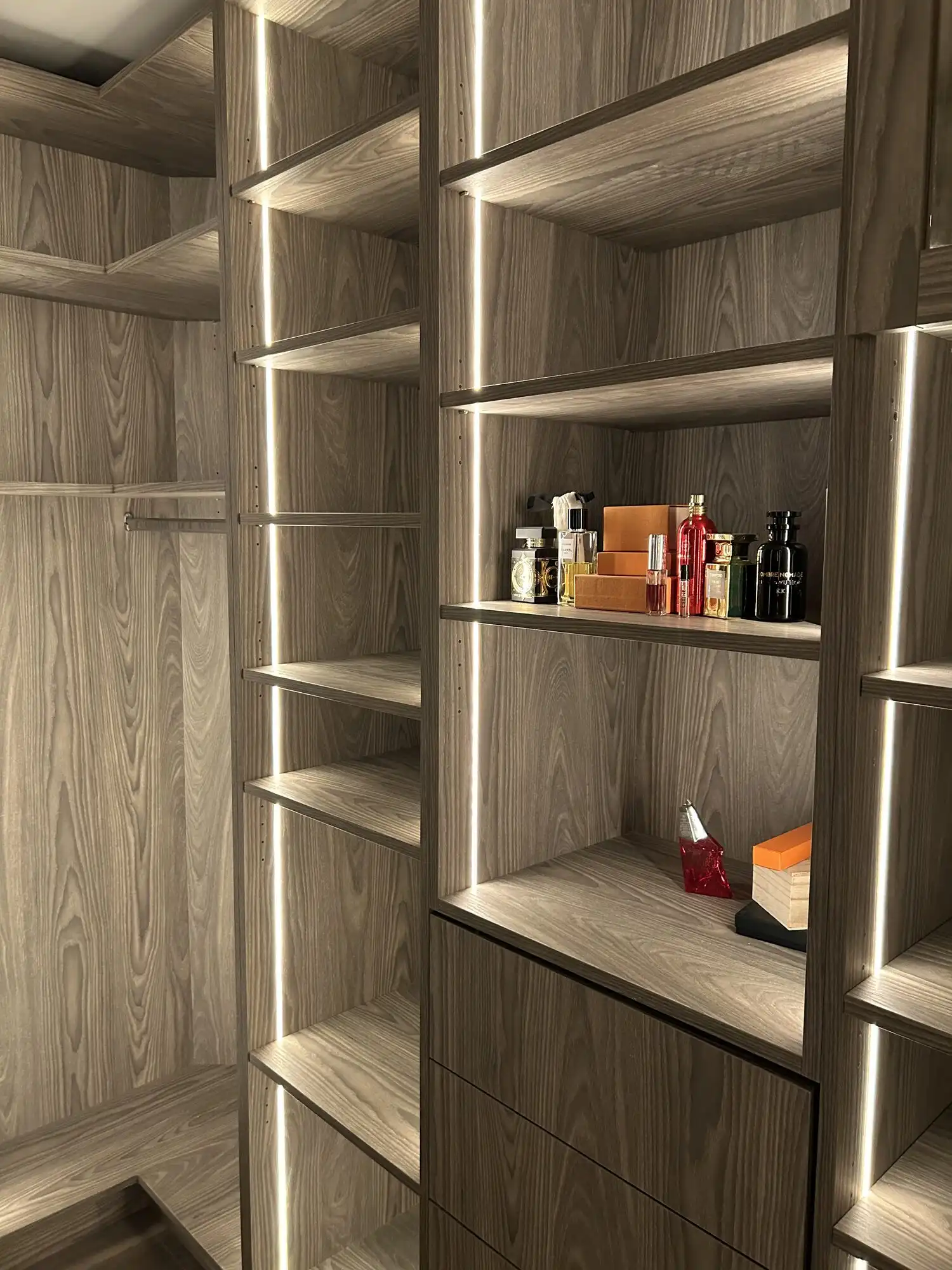
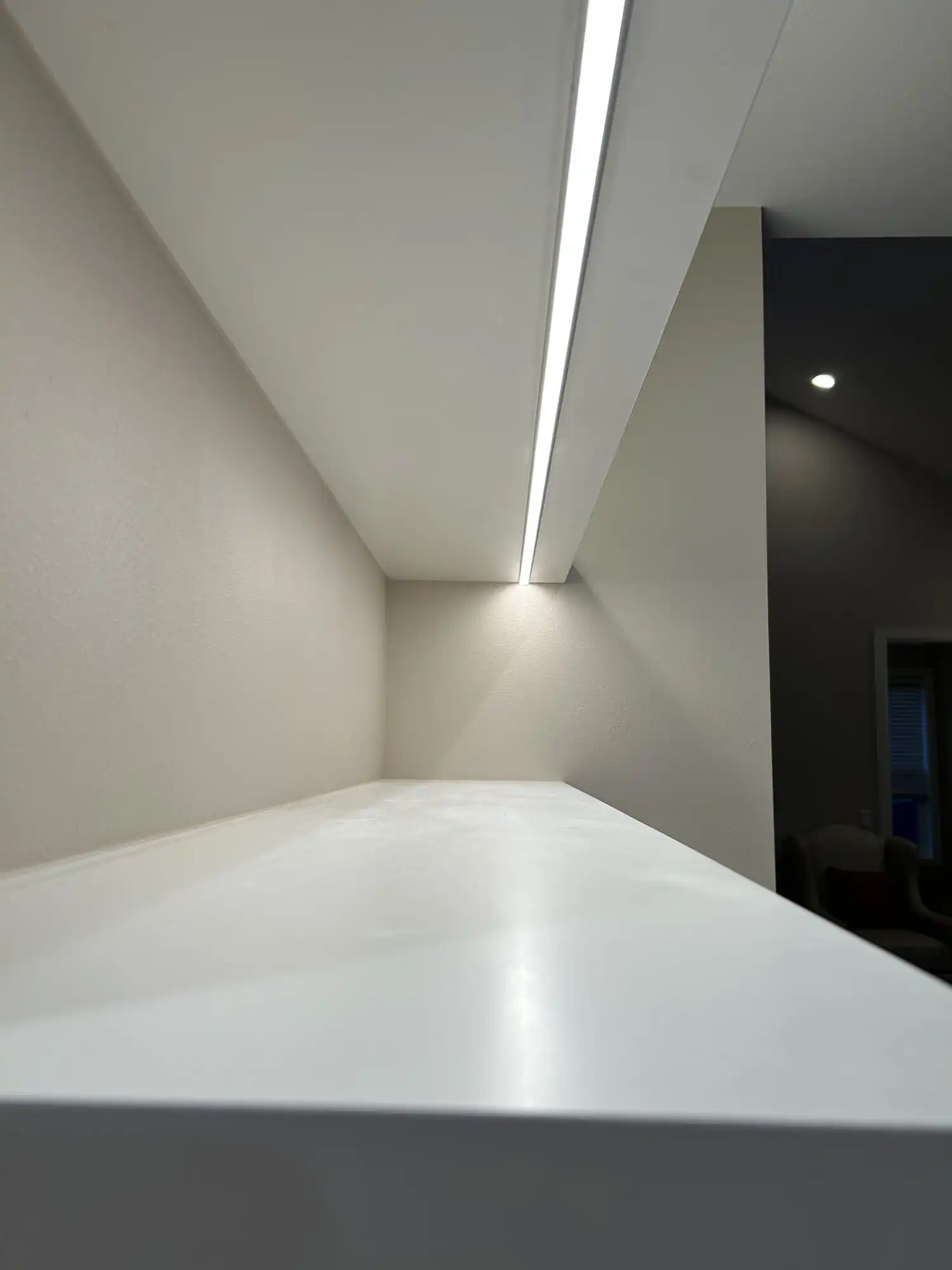
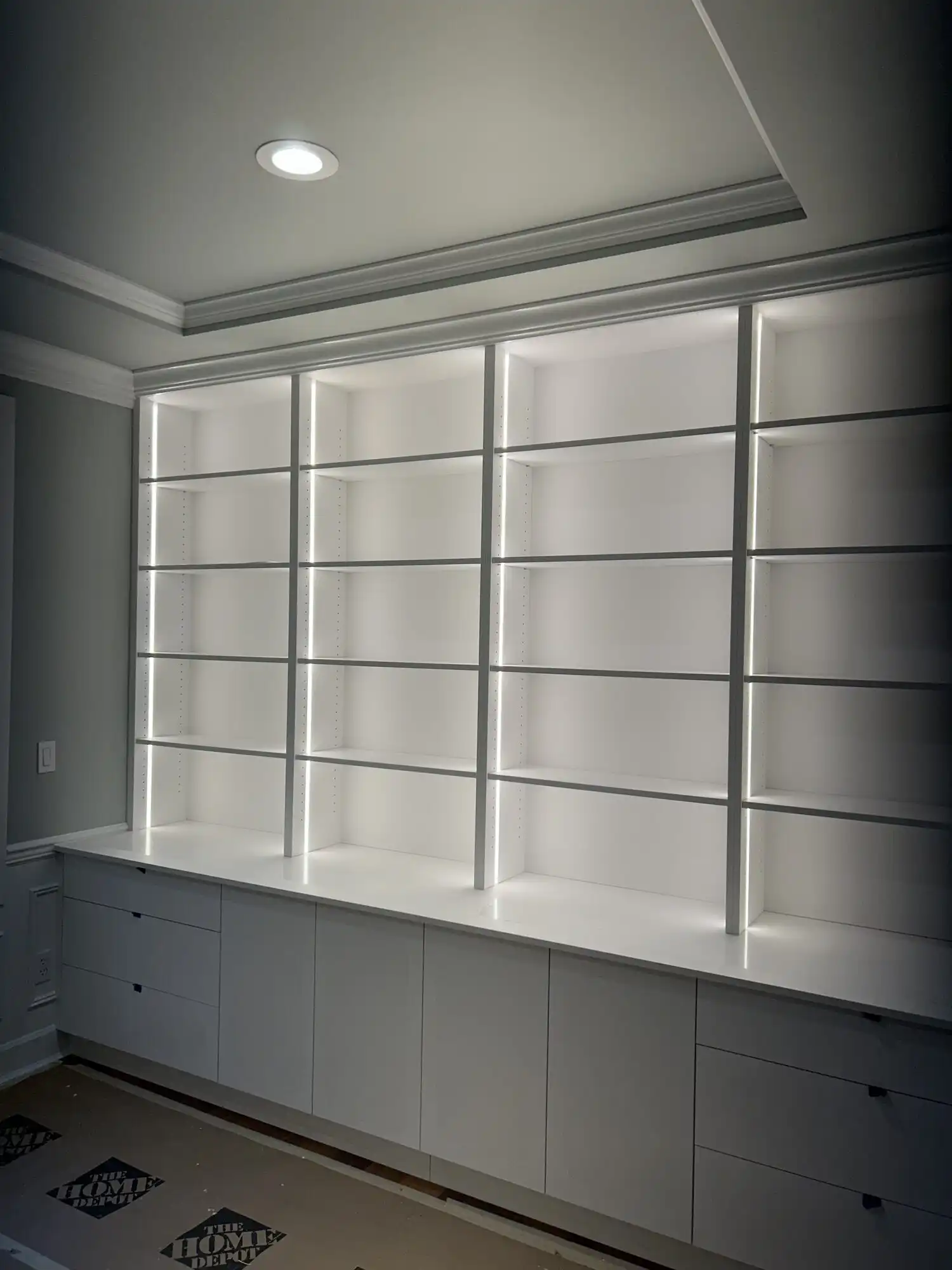
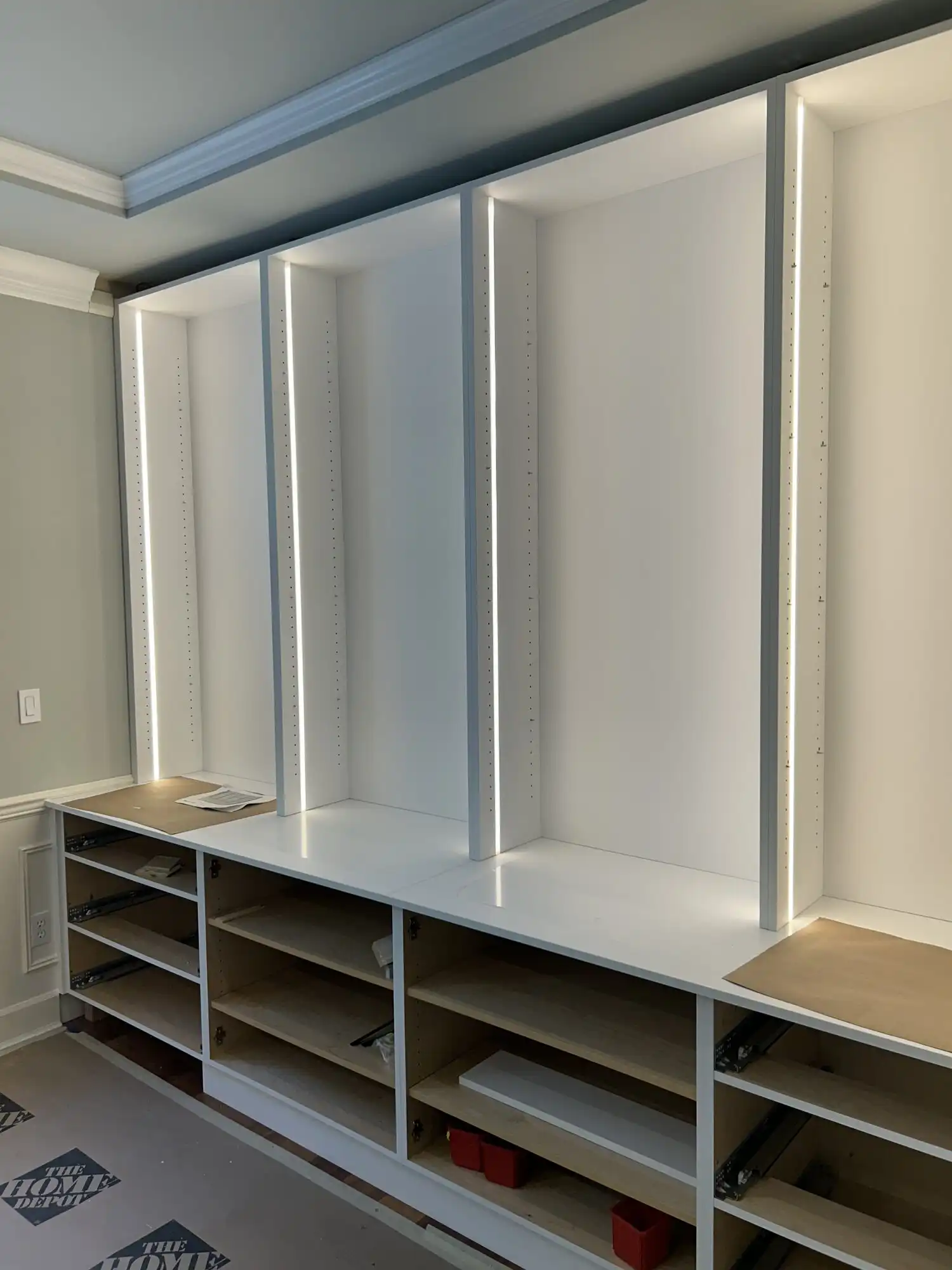
- LED channel in millwork — shelf uprights, closet shelving, coffered ceiling bays, under-cabinet runs, floating-shelf reveals. Aluminum channel with a frosted diffuser, fed from a remote low-voltage driver.
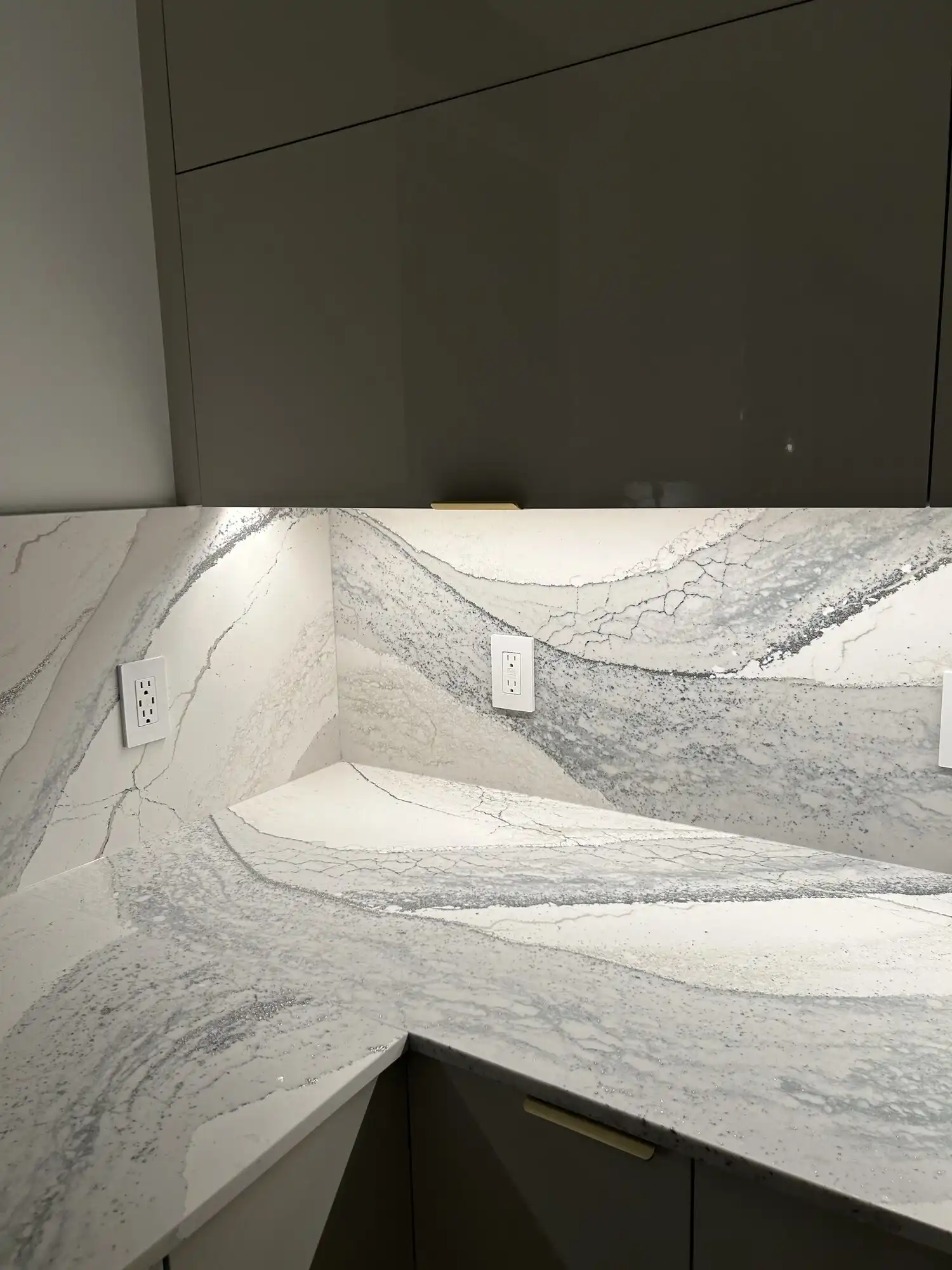
- Under-cabinet lighting, with the switch, the dimmer and the backsplash receptacles laid out with the stone fabricator instead of cut in after the slab is templated.
- Dimming and control systems, quoted per plan. Zone count, keypad count, wired versus wireless, and integration with shades or AV are what set the price, so this scope is priced from drawings.
What the electrician contributes
A fixture schedule says what to hang. It rarely says whether the system will work. Five things decide that, and all five are cheaper to settle on paper than on a ladder.
Drivers and dimmers are selected together. LED tape runs from a low-voltage driver, and the driver picks the protocol: TRIAC or ELV on the line side, or 0–10 V, which needs a separate control pair pulled at rough-in and is effectively unavailable afterwards. A dimmer whose minimum load sits above what the tape actually draws will buzz, flicker, or drop out at the bottom of its range. We reconcile dimmer type against every driver cut sheet before the order goes in, and group loads so no dimmer is left under-loaded.
Colour temperature has to be held. 2700 K and 3000 K read as interchangeable in a catalogue and obviously different on one sightline. Two production runs of the same tape can differ as well. We hold one colour temperature and one CRI class per sightline, order the channel and the downlights for a room together, and flag mixed vendors — a decorative pendant from one source, downlights from another — while the fixtures can still be swapped.
Switching and zones are a wall decision, not a switch decision. Which downlights share a dimmer, whether shelf channel and toe-kick sit on one zone, where the keypad lands, and how many gangs the box has to be are all fixed at rough-in. Changing your mind afterwards costs drywall, tile and paint, not a device.
Junction boxes go in before the millwork closes. Once a coffered ceiling is skinned or a built-in is scribed to the wall, the driver location is permanent. LED drivers generally fail before the diodes do, so a driver sealed behind a fixed panel turns a routine swap into cabinet surgery. We set boxes and leave every driver reachable — a removable panel, a toe-kick, the closet on the other side of the wall.
Occupied buildings set the schedule. Most of this work happens in finished high-rise units and lived-in homes: freight elevator windows, posted work hours, corridor protection, dust control around cabinetry that is already installed, and access cleared with building management in advance. HB Power Electric is owner-operated, so it is one name on the access list and the same person on site each day.
The Bellevue and Sammamish work below
The Bellevue high-rise condo — the pendant clusters in the wood soffit, the halo sconces, the marble bathroom pendants, the recessed stair lights, the under-cabinet strip and the closet LED millwork — was done in October 2024, before HB POWER ELECTRIC LLC existed. It is our owner’s prior work, and the gallery captions it that way. The Sammamish photographs, the floating-shelf reveal and the built-in shelving with lit coffered ceiling bays, are the company’s own work from 2026.
Two honest gaps. There is no photograph here of exterior or landscape lighting, and none of a commercial office lighting retrofit — everything below is residential interior work. And none of the four utility lighting incentives in this corridor reaches a house or a single condo unit: Seattle City Light, Puget Sound Energy, Snohomish County PUD and Tacoma Power all write theirs for commercial and multifamily-building retrofits.
How a lighting job runs
Plan review comes first — fixture schedule, reflected ceiling plan, millwork shop drawings and driver cut sheets, marked up and returned with the conflicts named. Then the permit, which WAC 296-46B-901 requires the electrical contractor to buy from the authority for that address before work starts. Rough-in then follows the cabinet shop’s calendar rather than ours, because every box has to be right before anything closes. Trim, aiming and dimmer commissioning happen last, with the room finished and the fixtures lit, which is the only point at which colour and beam angle can honestly be judged.
When the plan is a commercial interior rather than a residence — a boutique, a clinic waiting room, a restaurant dining room — the control scope also has to satisfy Washington State Energy Code C405, and that changes both the fixture selection and the number of control devices in the bid.
HB Power Electric is licensed and bonded in Washington, licence HBPOWPE758PO, specialty General (01), owner-operated out of Bothell.
What it costs
| Work | Typical range | What moves the price |
|---|---|---|
| Millwork, cove and step LED lighting package | $5,000–$30,000 | Linear feet of channel, driver and dimming compatibility, whether the millwork is already built, and colour-temperature matching across rooms. |
| Whole-home dimming and lighting control system | $8,000–$25,000 for about twelve zones; large luxury systems run well past that | Zone count, keypad count, wired versus wireless, and integration with shades and AV. |
Prices shown are typical ranges for the Puget Sound area as of September 2026, compiled from published industry and local contractor sources. Every job is quoted after a site visit or plan review. Permit fees, utility charges and equipment are itemized separately unless stated.
Code and compliance that shapes the scope
- Washington State Energy Code C405 — lighting controls
- Commercial interior lighting must meet lighting power density limits and provide occupancy, daylight and time-switch controls. Control scope is priced into every tenant-improvement lighting bid. Verified 5 September 2026 · source ↗
Work we have photographed
Common questions
Do I need a permit for new lighting in Bellevue?
For anything that adds a circuit, an outlet box or a new switch leg, yes — which covers nearly every millwork, recessed and control package. Replacing a fixture on an existing box is generally treated as maintenance. WAC 296-46B-901 puts the permit on the electrical contractor, bought before work starts, so it is our line item rather than yours. Bellevue, Sammamish, Redmond and Kirkland issue and inspect their own electrical permits, Seattle work goes through SDCI, and Bothell, Kenmore and Issaquah are permitted by Washington L&I.
Can you install fixtures the designer or the homeowner supplies?
Yes, and on this kind of work that is the normal arrangement. Three things get checked before anything is hung: that the outlet box is rated for the load, since a standard box carries a luminaire up to 50 pounds unless it is listed for more and heavier pendants need support independent of the box; that the driver and the dimmer agree; and that the mounting hardware suits the substrate behind the finish. Send cut sheets with the schedule and those problems surface while a fixture can still be exchanged.
How much does architectural lighting cost?
A millwork, cove and step LED package runs $5,000–$30,000, and a whole-home dimming and lighting control system runs $8,000–$25,000 for about twelve zones, with large luxury systems well past that. Those are published Puget Sound ranges as of September 2026, not a quote. Linear feet of channel, driver and dimming compatibility, whether the millwork is already built, and how many colour temperatures have to be matched are what move a package within its range. Both scopes are priced from the drawings after a plan review.
Can LED channel be added to millwork that is already built?
Sometimes, and it is a different job from doing it at rough-in. Surface-mounted aluminum channel can be screwed to the underside of a shelf or a cabinet without touching the case, but a flush reveal needs a routed groove, which means the cabinet shop back on site. The harder half is the wire path: a driver has to land somewhere reachable, and getting low-voltage from that driver to the millwork through finished walls often means fishing or a short section of surface raceway. We look at it before quoting.
Do you work directly with the interior designer or the builder?
Yes. The useful sequence is a plan review before anything is ordered, then coordination with the cabinet shop and the drywall schedule, because the electrical rough-in has to fall between framing and closing. Fixture schedules, reflected ceiling plans and driver cut sheets come back marked up with conflicts named — dimmer protocol, missing control pairs, boxes that will not clear a soffit, colour temperatures that do not match on a shared sightline. HB Power Electric is owner-operated, so the person reviewing the plan is the person on site.
Will adding lighting mean a panel upgrade?
Usually not. LED fixtures draw very little, so a millwork and cove package normally sits on existing 15 A or 20 A lighting circuits with room to spare. What forces a change is space rather than capacity: a control system with many zones needs a dimmer or a module per zone, and a large system may need spare breaker positions or a small subpanel to land them. That gets checked during plan review, against the existing panel directory, before the lighting scope is priced.
Send your lighting plan
Fixture schedule, reflected ceiling plan, millwork shop drawings and driver cut sheets. They come back marked up with the dimmer, driver and box conflicts named, then a written scope.
We reply as soon as we are off the job — usually the same day.