Residential electrician in Bothell, Kenmore and the north Eastside
HB Power Electric is an owner-operated residential electrician based in Bothell, serving Kenmore, Woodinville, Kirkland, Lynnwood and Mill Creek. Typical work: a breaker that keeps tripping, dead outlets, added kitchen and bathroom circuits, remodel and ADU wiring, subpanels and whole-house rewires. New wiring needs a permit, which the contractor buys before work starts.
- Permitted & inspected
- Owner-run · WA Journey Level (01) + Electrical Administrator
- Licensed and bonded — verify # HBPOWPE758PO ↗ (opens in a new tab)
| Hourly rate band | $140–$200 per hour is the published Seattle-metro band for licensed electricians; jobs with a defined scope are quoted flat after a look As of September 2026 |
|---|---|
| Permit | Required for new or altered wiring. HB Power Electric buys the permit before work starts and schedules the inspection. |
| Permit authority | Washington L&I in Bothell and Kenmore; Kirkland and Lynnwood run their own electrical permitting; Seattle is SDCI |
| L&I circuit permit fee | $100.50 for the first panel of up to five circuits, then $8.20 per additional circuit As of July 2026 |
| Scheduling | One licensed owner does the work, so small jobs are grouped by area. No after-hours or on-call service. |
| Credentials | WA Electrical Contractor HBPOWPE758PO, General (01), licensed and bonded As of September 2026 |
What a residential call usually is
Most of this work is one of six things: a breaker that will not stay on, an outlet or a whole room gone dead, lights that flicker, a circuit that has to be added or moved for a remodel, a panel with no room left in it, or a device swap — receptacles, switches, smoke and CO alarms. HB Power Electric is owner-operated. The person who looks at the job is the person who wires it and meets the inspector.
Why does a breaker keep tripping?
A breaker that trips is doing its job, so the useful question is which kind of trip it is.
- Standard breaker, trips under load. An overload. A 1,500 W space heater sharing a 15 A bedroom circuit with anything else will do it every time.
- Trips the instant you reset it. A short between conductors or a ground fault. It stays off until the fault is found, usually by splitting the circuit at the boxes.
- AFCI breaker, trips at odd hours. Often a shared neutral between two circuits landed on one breaker, a staple driven through a cable, or an older motor-driven appliance.
- GFCI in the garage or outdoors, trips after rain. Moisture in a box or a failing weather-resistant receptacle, not the breaker.
Fault-finding is time, not a fixed scope — nobody can price a fault before finding it. The rate table below is the published Seattle-metro band for licensed electricians.
Dead outlets and flickering lights
A dead outlet is often not the outlet. Back-stabbed receptacles, where the conductor is pushed into a hole in the back instead of landed under a screw, fail at that contact and take the rest of the daisy chain down with them. A dead bathroom or garage receptacle is just as often a GFCI in another room that tripped and went unnoticed.
Flickering is worth separating by scale. One fixture flickering is the fixture, the lamp, or a dimmer that is not rated for the LED driver in it. Flicker across the whole house that shifts when a large load starts is a loose service neutral. That is a genuine hazard — it puts uneven voltage across the two 120 V legs and destroys electronics — and it gets checked at the meter base and the main lugs first, because the fault is sometimes on the utility’s side of the meter.
Adding and moving circuits
Kitchens and bathrooms take most of the added circuits. A kitchen needs at least two 20 A small-appliance circuits for the countertop receptacles, and a bathroom needs a 20 A circuit of its own. Past that, the usual list is a 40–50 A range circuit, a 30 A dryer, a dedicated circuit for a dishwasher or microwave, and a 50–60 A GFCI-protected feed for a hot tub.
The constraint is almost never the wire. It is the panel. A 240 V circuit needs a spare double-pole slot, and a full 100 A panel usually means a subpanel, load management or a service upgrade before the new circuit can be landed at all. A subpanel also has to have its neutrals and grounds separated and a four-wire feeder, which is the detail most often missed in older work.
Remodels, ADUs and whole-house rewires
Remodel and ADU wiring runs in two passes: rough-in while the walls are open, inspected before insulation goes in, then trim once drywall and cabinets are done. An ADU normally gets its own subpanel fed from the house panel, and the feeder size comes out of a load calculation rather than a rule of thumb.
Whole-house rewires come up here for two reasons: knob-and-tube still in service in a pre-war house, and aluminum branch wiring in houses built roughly 1965 to 1973, which is corrected with listed connectors at every device rather than ignored. Both are staged room by room so the house stays livable, and both are permitted and inspected like new work.
What needs a permit in a house, and what does not
| Work | Permit |
|---|---|
| New circuit, or a new outlet or switch location | Yes |
| Panel or subpanel replacement, service change | Yes |
| Remodel or ADU rough-in, rewiring a room | Yes |
| Hot tub, range, dryer, EV charger or heat pump circuit | Yes |
| Replacing a receptacle, switch or fixture like for like | No |
| Replacing a breaker like for like in the same panel | No |
WAC 296-46B-901 requires the permit before work starts and posted at the site. A contractor may not work under a homeowner’s permit, so HB Power Electric buys its own on every job and schedules the inspection.
Who issues the permit where you live
Bothell and Kenmore are Washington L&I jurisdictions. Kirkland and Lynnwood run their own electrical permitting, and Seattle is SDCI. Ten SDCI permits have been pulled since December 2025, nine completed and inspected. The L&I fee for a first panel of up to five circuits and for each circuit after that is in the quick facts above; city fees differ, and which office applies is confirmed before anything is filed.
How one licensed owner schedules small jobs
One person does the work, and that changes how small jobs get booked. A two-hour outlet repair is grouped with other work in the same area rather than driven to on its own, so Bothell, Kenmore, Woodinville, Kirkland, Lynnwood and Mill Creek are the easiest addresses to fit. Jobs further down the I-5 corridor — Seattle, Bellevue, Everett, Tacoma — are booked as full days. There is no after-hours or on-call service. Call or text to get on the schedule.
What the photos below show
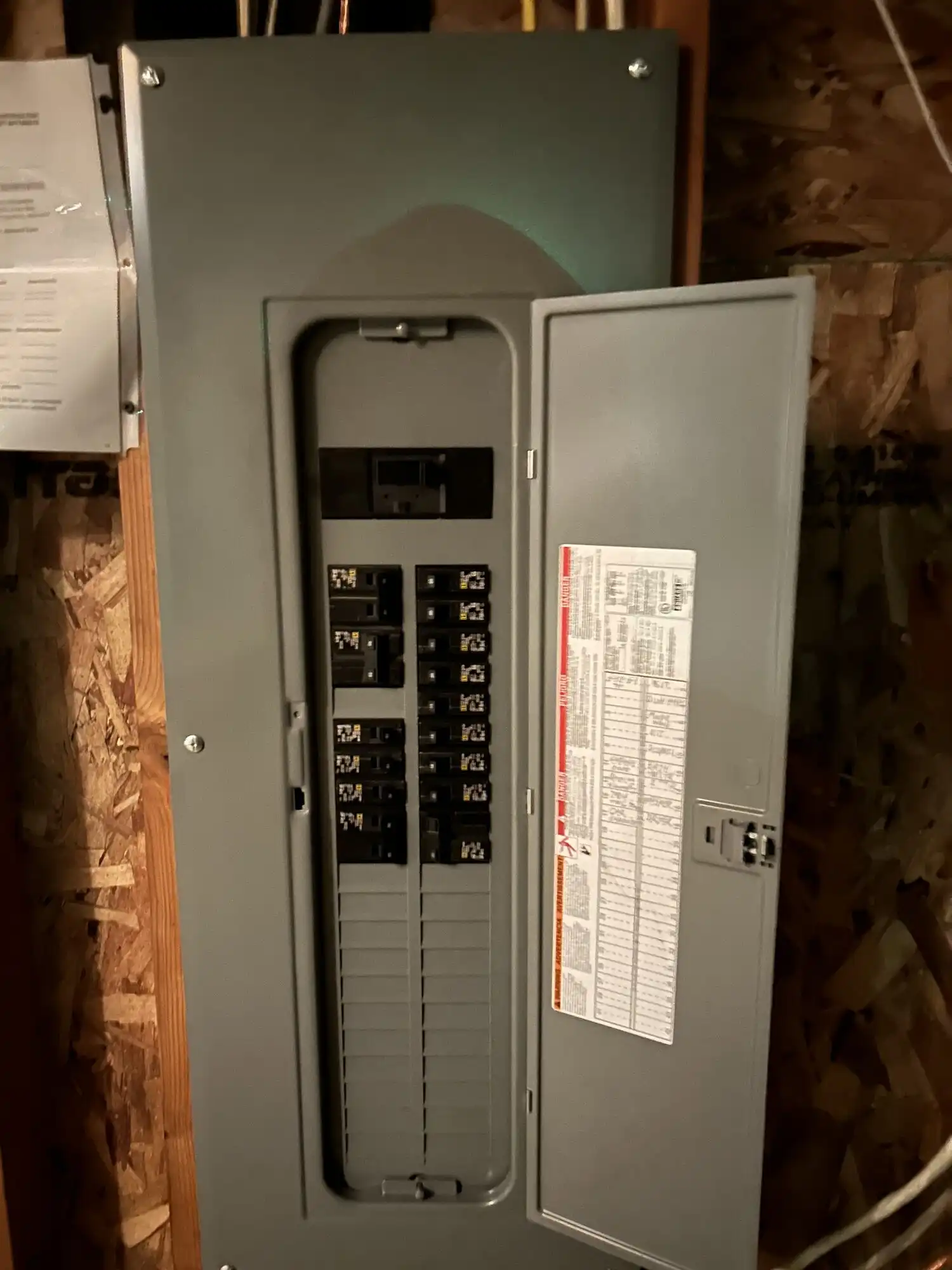
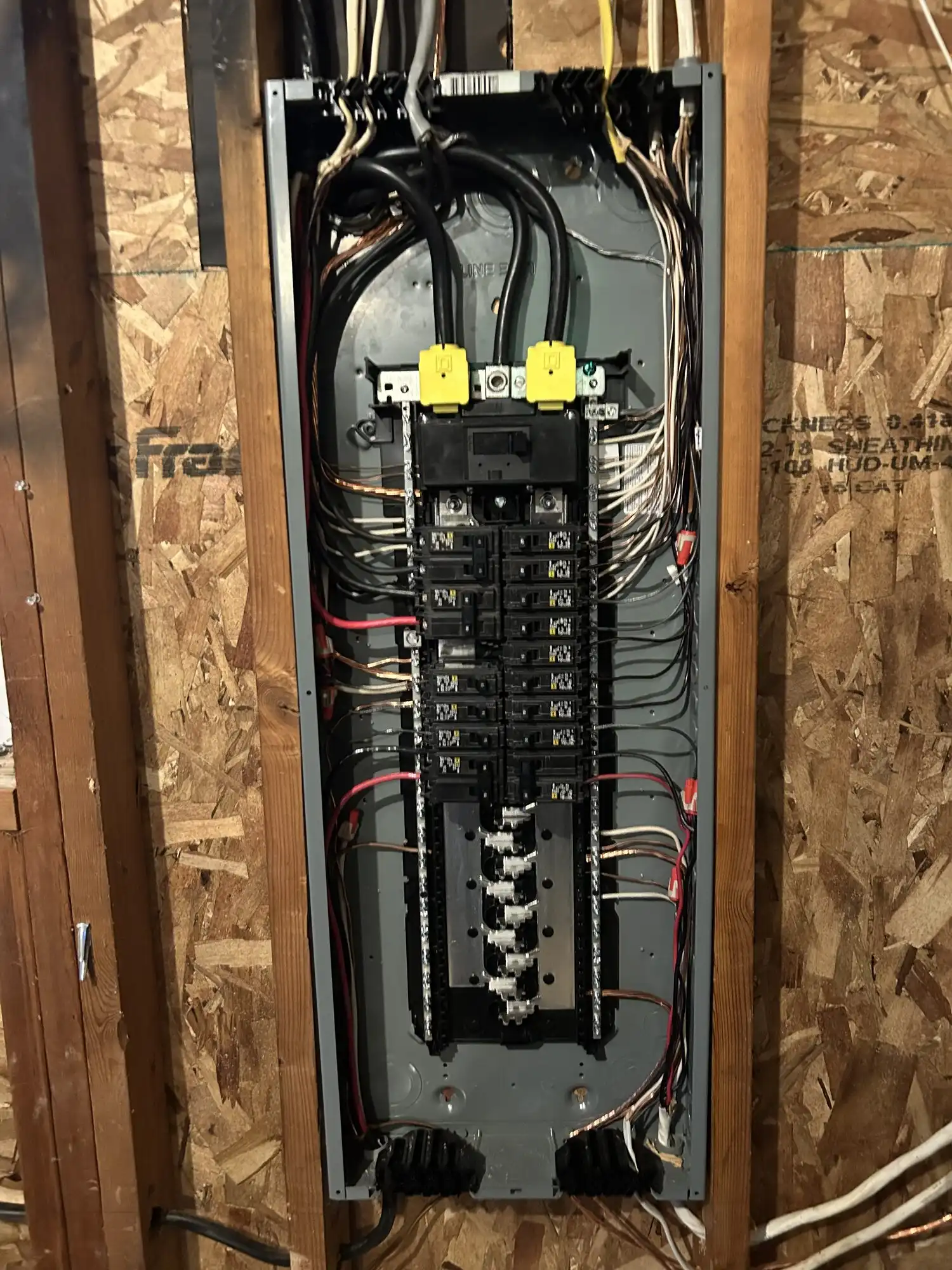
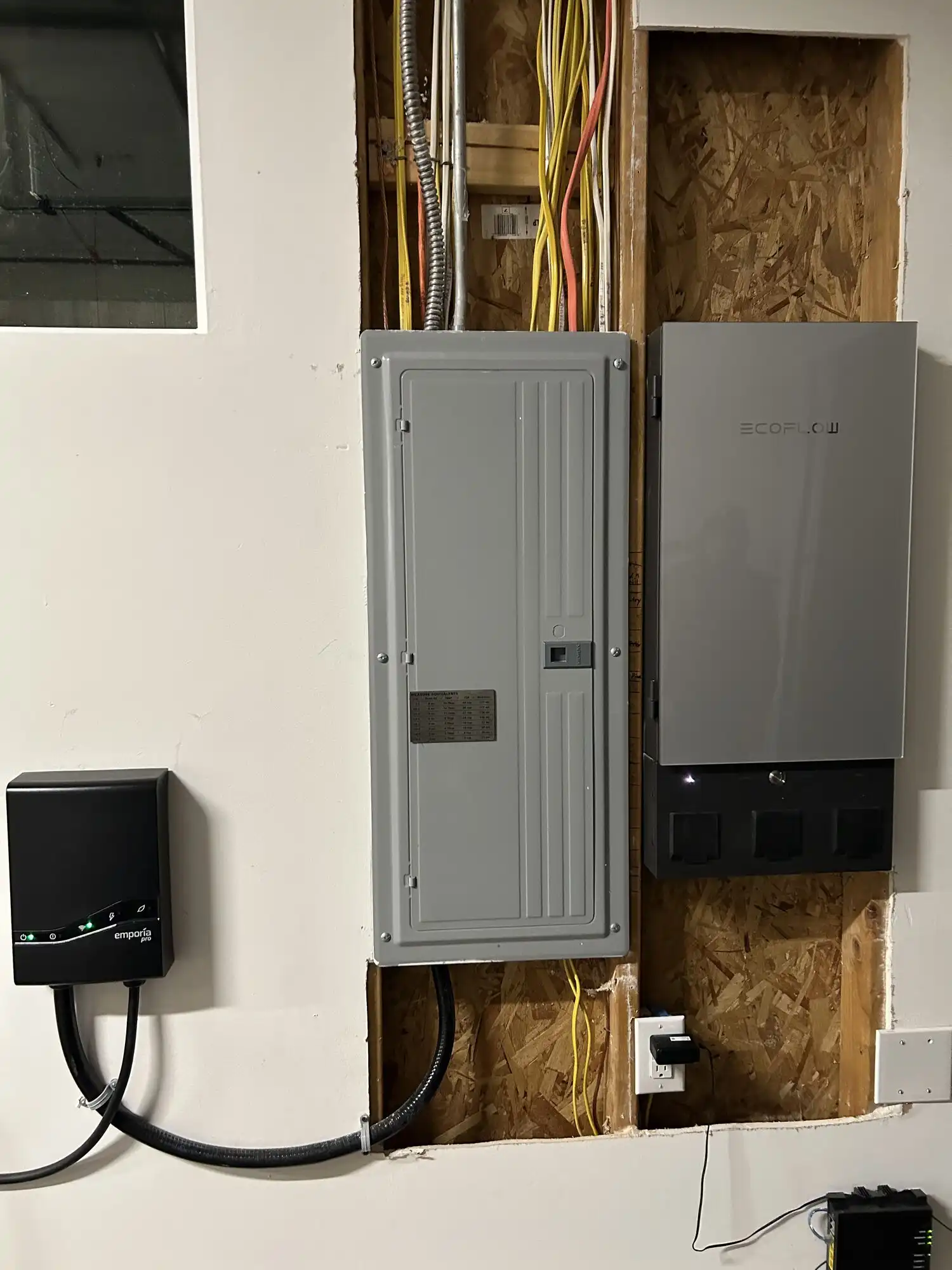
The gallery is a Kent panel replacement — a new load center populated with breakers, neutral and ground bars landed, and a labeled circuit directory inside the door — and a Seattle garage where a new 100 A subpanel went in beside the main panel with an EcoFlow Smart Home Panel 2 over it, a 50 A generator inlet on a mechanical interlock and a 60 A Emporia Pro EV charger circuit. There is no photograph yet of a bathroom circuit, an ADU rough-in or a whole-house rewire, so nothing shown here stands in for one.
What it costs
| Work | Typical range | What moves the price |
|---|---|---|
| Hourly service rate, Seattle metro | $140–$200 per hour | This is the published Seattle-metro market band for licensed electricians. HB Power Electric quotes small jobs as a flat price after a look, not by the hour, wherever possible. |
| Subpanel installation | $1,500–$3,500 | Feeder length and size, whether the main panel has a spare double-pole slot, and finished-wall routing. |
Prices shown are typical ranges for the Puget Sound area as of September 2026, compiled from published industry and local contractor sources. Every job is quoted after a site visit or plan review. Permit fees, utility charges and equipment are itemized separately unless stated.
Work we have photographed
Common questions
Can I do my own electrical work on a house I own in Washington?
Washington contemplates it. L&I's rule is that an electrical permit must be purchased by the electrical contractor or by the property owner or homeowner who will actually be doing the work. The catch is that last clause: the permit covers you doing the work yourself, not a friend, a handyman or anyone you hire. A contractor cannot work under your homeowner permit either. If we do the work, we buy our own, and the same inspector signs the job off.
How much does a residential electrician cost near Bothell?
The rate table on this page shows the published Seattle-metro band for licensed electricians as of September 2026. It is a market anchor, not a posted price. Fault-finding and small repairs are the jobs that genuinely run by the hour, because the scope is unknown until the fault is found. Anything with a defined scope — an added circuit, a subpanel, a rewire — is quoted flat after a look at the panel and the route, with the permit fee itemized separately.
Will my power be off, and for how long?
For a circuit added to an existing panel, power is off only while the breaker is landed, usually under an hour. A panel replacement is a full day with the service off, and it needs the utility to pull the meter or cut the drop, so their schedule sets the date as much as ours does. Rewires are staged room by room so the kitchen and the furnace stay live. You get the outage window before the day, in writing.
Can you add a hot tub or range circuit to my existing panel?
Usually, if the panel has a spare double-pole slot and the service has capacity. A hot tub wants a 50–60 A GFCI-protected circuit with a disconnect within sight of the tub and at least 5 ft from the water. A range is typically 40–50 A on a four-wire circuit. If the panel is full or the load calculation does not clear, the options are a subpanel, load management or a service upgrade — much cheaper to find out before the appliance is delivered.
Do you replace Federal Pacific and Zinsco panels?
Yes, and they are the panels most worth replacing. Both are obsolete brands with a documented history of breakers that fail to trip, and for many of these enclosures no listed replacement breaker is still made, so a bad breaker cannot simply be swapped out. A like-for-like 200 A replacement is the usual fix — see the panel upgrade page for that range. Aluminum branch wiring or knob-and-tube behind the old panel adds scope, and it turns up the day the cover comes off.
Do you wire smoke and CO alarms?
Yes. Interconnected hardwired alarms with battery backup are the standard once a remodel or a rewire triggers them, and they run on a three-conductor cable so one alarm sounding sets off the rest of the house. Swapping an existing hardwired alarm onto its own base is a device replacement and needs no permit. Adding alarm circuits where none existed is new wiring, and that does.
How do I know the work was actually inspected?
Every job that needs a permit gets one before work starts, and an inspection after. The inspector comes from Washington L&I, your city, or Seattle SDCI depending on where you live, and the approval is recorded against the permit. Ask for the permit number at any point and you get it. Ten Seattle SDCI permits have been pulled since December 2025, nine of them completed and inspected as of September 2026.
Tell us what you need done
Call or text and you will reach the owner, not a call centre. For anything with a drawing, an equipment list or a deadline, send it through the quote form and you will get a written scope back.
We reply as soon as we are off the job — usually the same day.