Puyallup · December 2025
EcoFlow Delta Pro Ultra whole-home battery backup in Puyallup
In December 2025 a Puyallup homeowner wanted the house to ride out a winter outage without a generator. The work was an EcoFlow Delta Pro Ultra inverter stacked on four battery modules, feeding an EcoFlow Smart Home Panel 2 mounted beside the existing load center. Washington L&I is the permitting authority in Puyallup. EcoFlow earns no PSE Flex incentive.
| City | Puyallup, Pierce County |
|---|---|
| When | December 2025 |
| Property | Single-family home, attached garage |
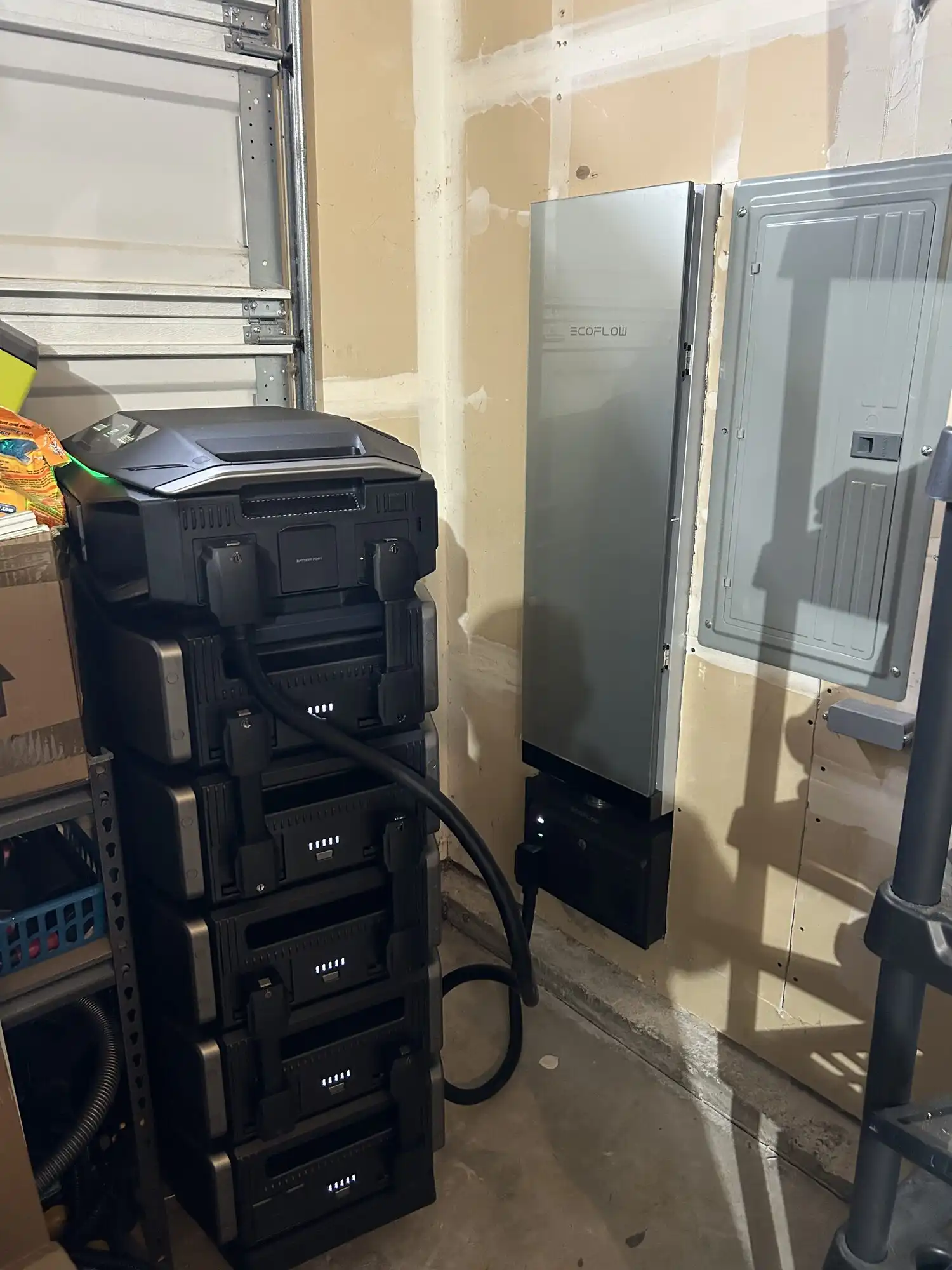
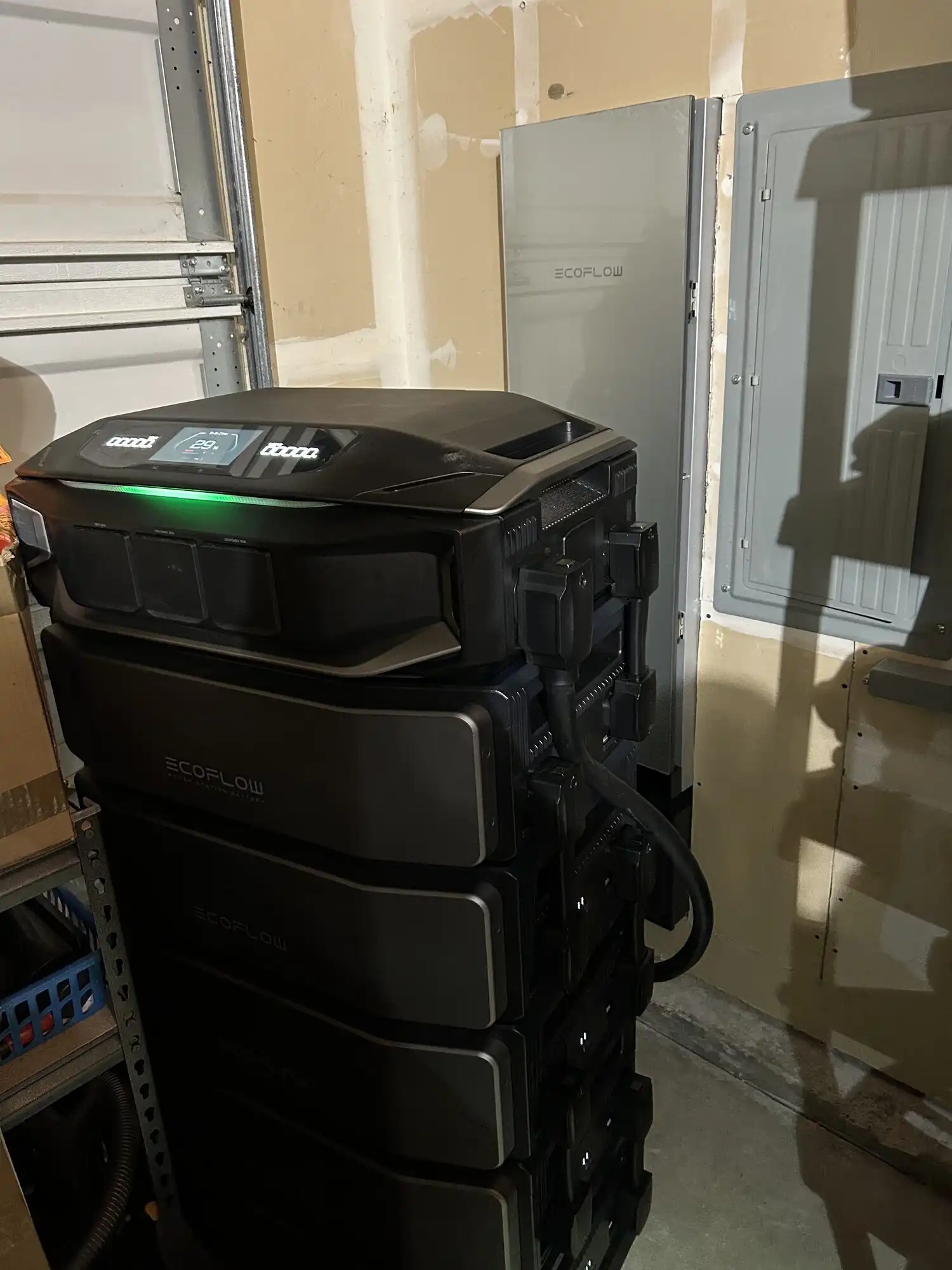
| Scope | EcoFlow Delta Pro Ultra inverter with four stacked battery modules and an EcoFlow Smart Home Panel 2 installed beside the existing load center, moving selected branch circuits onto battery automatically when the utility drops. |
| Permitting authority | Washington L&I |
| Equipment | EcoFlow Delta Pro Ultra inverter · Four EcoFlow Delta Pro Ultra battery modules · EcoFlow Smart Home Panel 2 · Existing residential load center |
| Permit note | Puyallup is a Washington L&I electrical permitting jurisdiction, not a self-inspecting city. Under WAC 296-46B-901 the contractor buys the permit before work starts. No permit number is published for this job. |
What the homeowner wanted
Enough stored energy to sit out a winter storm without buying fuel, starting anything, or running a cord across the garage. Pierce County outside Tacoma is Puget Sound Energy territory, tree-lined and rural in stretches, and a windstorm there can leave a block dark long after the wind has dropped.
What ended up on the garage wall
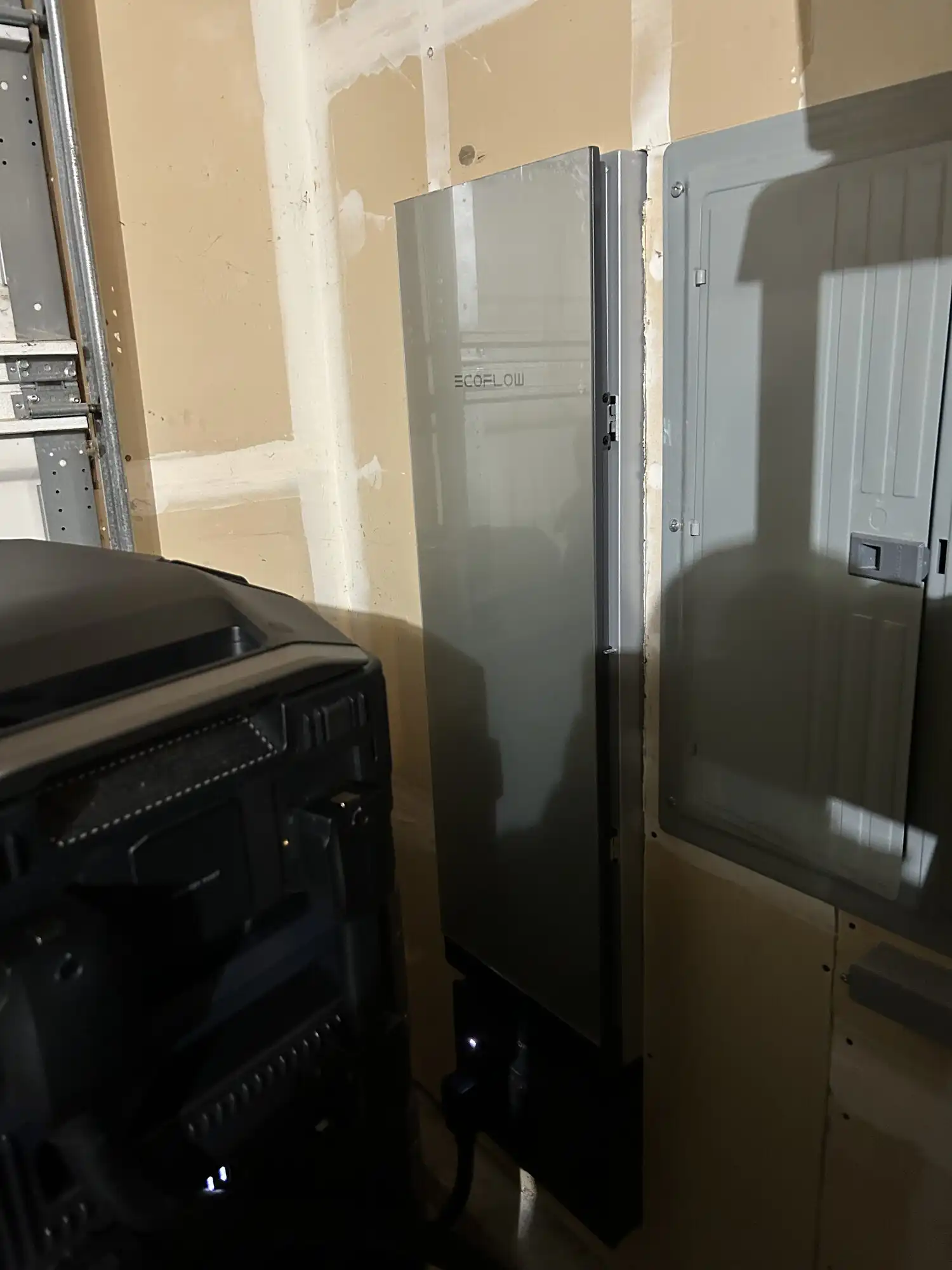
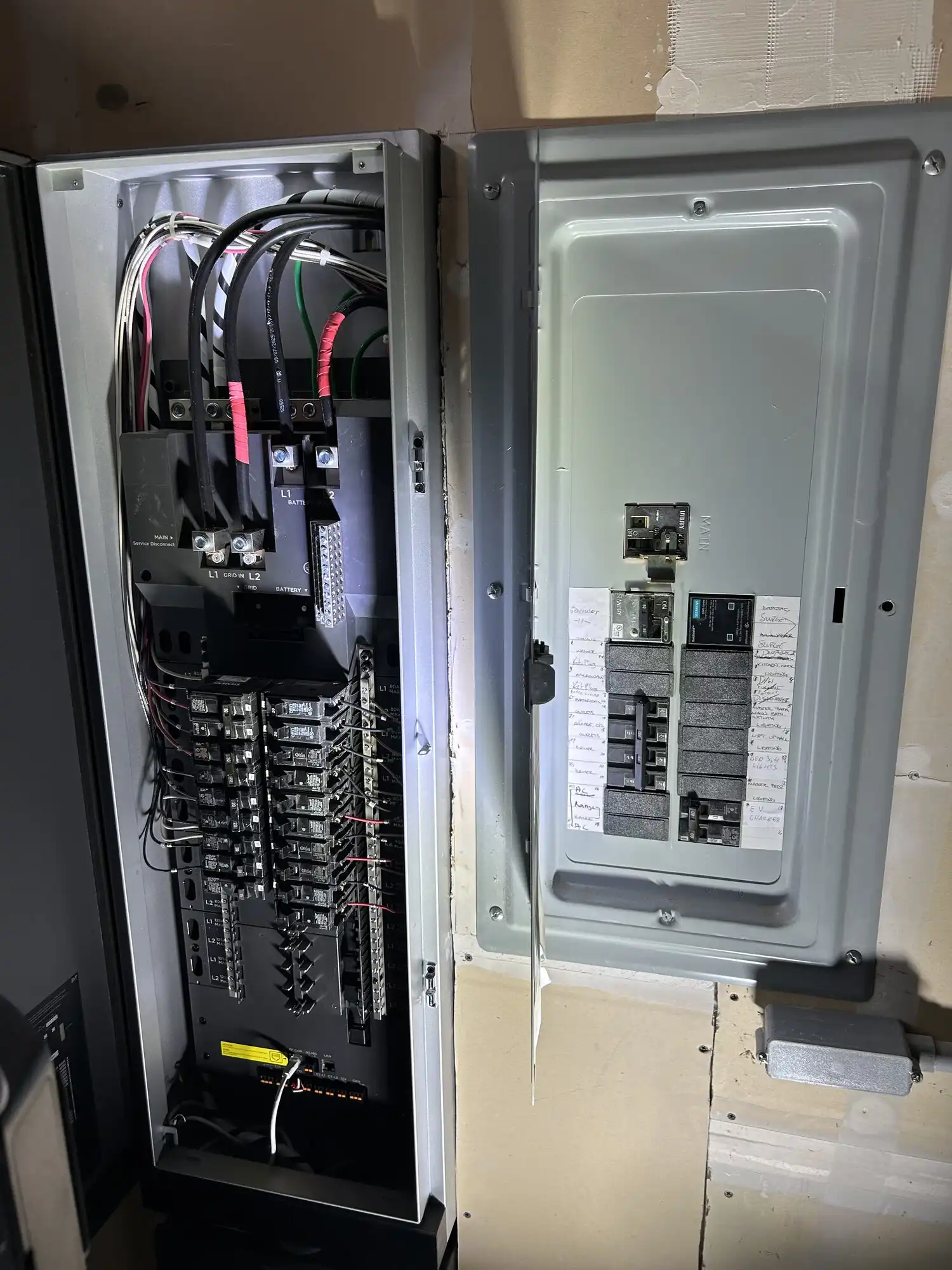
The Delta Pro Ultra inverter stands on the floor on a stack of four battery modules with the interconnect cables run between them, and flexible conduit carries the conductors up to the black base section under the Smart Home Panel 2. Behind that cover sit the main service disconnect, the L1 and L2 grid-in lugs, the battery lugs and a column of branch breakers. The existing gray load center is still on the wall next to it, cover on, its handwritten directory reading kitchen, lights, bedroom, EV charger and A/C.
Why not a generator
The alternative on this wall was fuel. A generator inlet with an interlock, or a six-circuit manual transfer switch, is the cheap end at $1,200–$3,000, but somebody has to be home to start the machine and keep feeding it. A standby generator at $10,000–$19,000 starts itself and brings a gas line, a pad and setback requirements with it. This homeowner wanted neither, so the budget went into storage that transfers on its own and makes no noise.
The incentive this system does not earn
Brand decides that one, and it has to be decided before the hardware is bought rather than after. PSE Flex Batteries is the residential storage program in this territory, and an EcoFlow system does not enter it. A buyer weighing hardware is comparing a published $6,000–$15,000 for a Smart Home Panel 2 with a Delta Pro Ultra against a published $13,000–$16,500 for a Powerwall 3 that does have an incentive path and a pre-approval step. Every figure here is a typical Puget Sound range as of September 2026, not a quote and not this job’s invoice.
Permit, and what the photos do not show
Puyallup sits outside any self-inspecting city, so this job runs on the L&I permit and inspection calendar rather than a city one, and both ends of the schedule depend on it. The photographs were taken while the garage drywall was still unfinished, so there is no finished-wall shot of this install.
Photographs from this job
Common questions
How is a Delta Pro Ultra battery stack sized?
By module count. The inverter sits on a stack of battery modules, and the stored energy is whatever those modules hold, so sizing starts with the circuit list rather than with the hardware. This install has four modules under one inverter. When comparing systems, take the per-module capacity from EcoFlow's published specification, multiply it by the number of modules, then weigh that against the circuits that will sit behind the smart panel. Run time depends on the load as much as on the battery.
Does the Smart Home Panel 2 replace the main panel?
No, and that is why it hangs beside the existing load center rather than in place of it. It is a transfer and relay panel: up to twelve branch circuits are moved onto its relay modules, each switchable on its own so low-priority loads can be shed during an outage. The remaining circuits, including the large ones the battery was never meant to carry, stay in the original panel behind its main breaker.
Does an EcoFlow battery qualify for the PSE Flex battery rebate?
No. As verified on 2026-09-05, PSE Flex Batteries pays a $75 per kWh enrollment rebate up to $1,000 per battery, plus up to $500 per battery per year for demand events, and its eligible list is Tesla, Enphase, FranklinWH and SolarEdge installed by a PSE Recommended Energy Professional. EcoFlow is not on that list. If the incentive matters more than the hardware price, choose the brand before the install, and apply before buying — the program requires pre-approval.
Who issues the electrical permit for a battery install in Puyallup?
Washington L&I. Puyallup does not run its own electrical inspection program, so the permit is bought from L&I and an L&I inspector signs it off. That differs from Seattle, where SDCI issues and inspects, and from Tacoma, where Tacoma Power is involved. Under WAC 296-46B-901 the electrical contractor buys the permit before work starts, not the homeowner and not after the fact.
Shown with the customer’s permission. All location metadata has been removed from these files and no street address, unit number or identifiable person appears in them.
Have a job like this?
Call or text and you will reach the owner, not a call centre. For anything with a drawing, an equipment list or a deadline, send it through the quote form and you will get a written scope back.
We reply as soon as we are off the job — usually the same day.