Sammamish · August 2026
Built-in shelving and millwork LED lighting in Sammamish
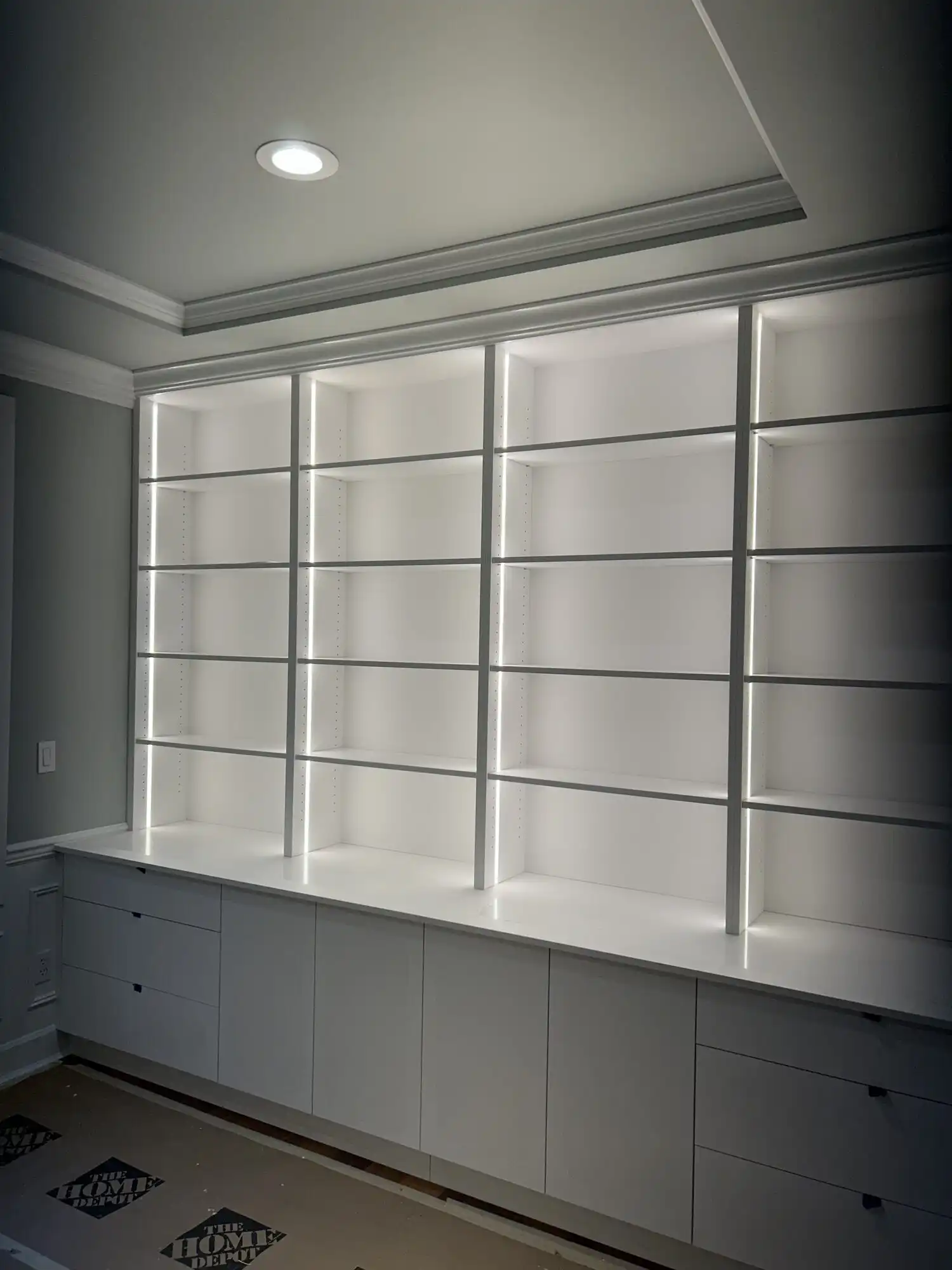
In August and September 2026 a Sammamish homeowner had a wall of custom built-ins that needed light. The work was recessed LED channel and strip routed into every shelf divider, LED bays in the tray ceiling above it, and the low-voltage runs and drivers feeding them. Sammamish issues and inspects its own electrical permits.
| City | Sammamish, King County |
|---|---|
| When | August 2026 |
| Property | Single-family home, built-in millwork |
| Scope | Recessed LED channel and strip lighting in every shelf divider of a custom built-in wall, LED bays in the tray ceiling above it, and the low-voltage runs and drivers feeding them. |
| Permitting authority | City of Sammamish |
| Equipment | Recessed LED channel and strip in every shelf divider · LED strip in the tray-ceiling bays · Low-voltage LED drivers and home runs · Brass cone wall sconces (separate Sammamish job, March 2026) · Linear LED reveal under a floating shelf (March 2026) |
| Permit note | Sammamish issues and inspects its own electrical permits rather than Washington L&I. WAC 296-46B-901 requires the contractor to buy the permit before work starts. No permit number is published for this job. |
What the wall needed
A run of custom white built-ins with a lit channel in every shelf divider, under a tray ceiling with LED bays of its own. The cabinetmaker was building the boxes. The lighting had to live inside them and stay out of sight.
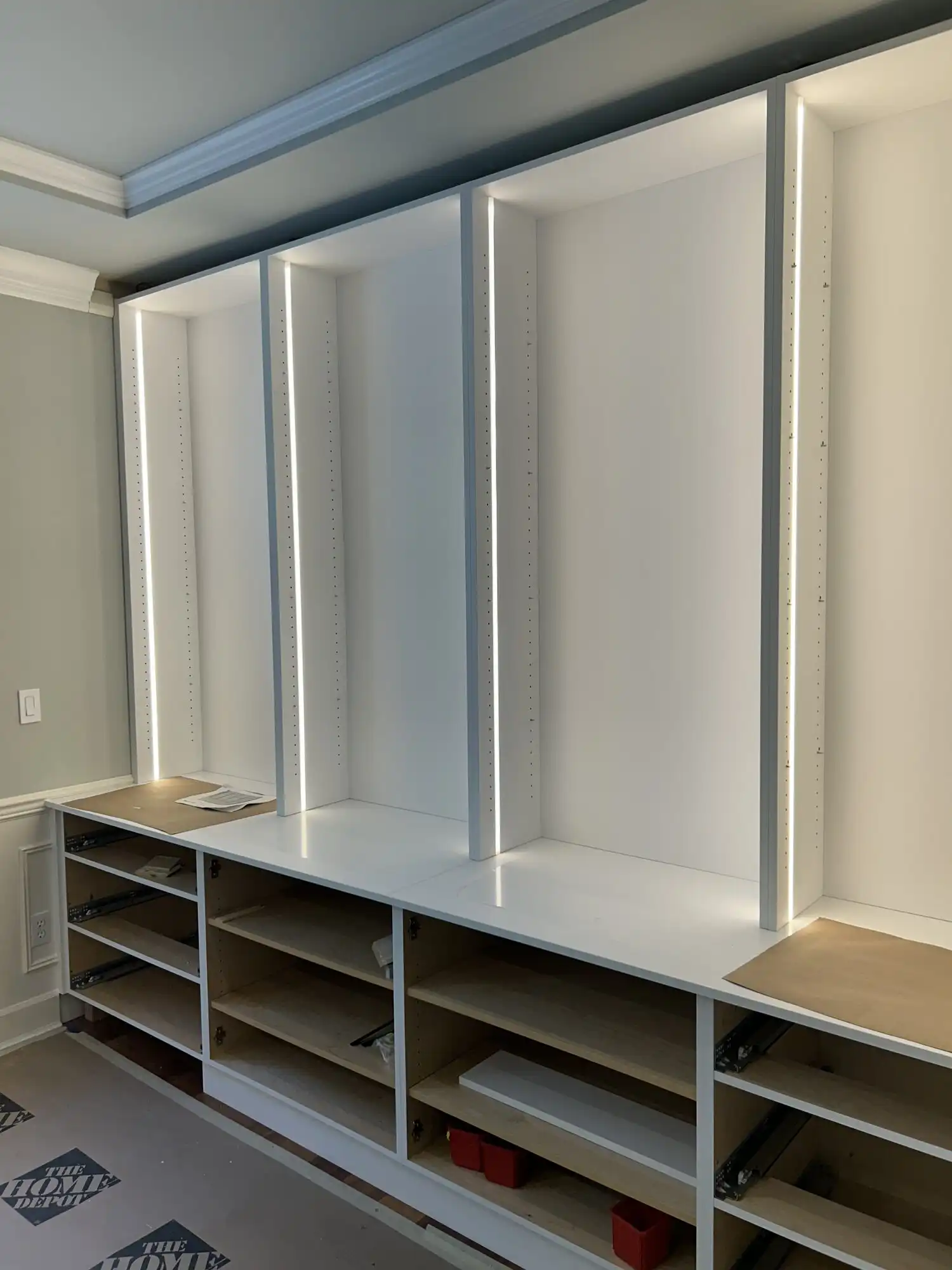
Vertical channels, one per divider
The channel is routed vertically into each divider rather than run flat along the shelf, so the light washes the full height of the bay instead of striping the shelf below it. Every divider on the wall carries one. The strips were energized and checked before the shelving went in: the second photo below is that stage, every channel lit and the shelves still off.
Keeping the tape out of the sight line
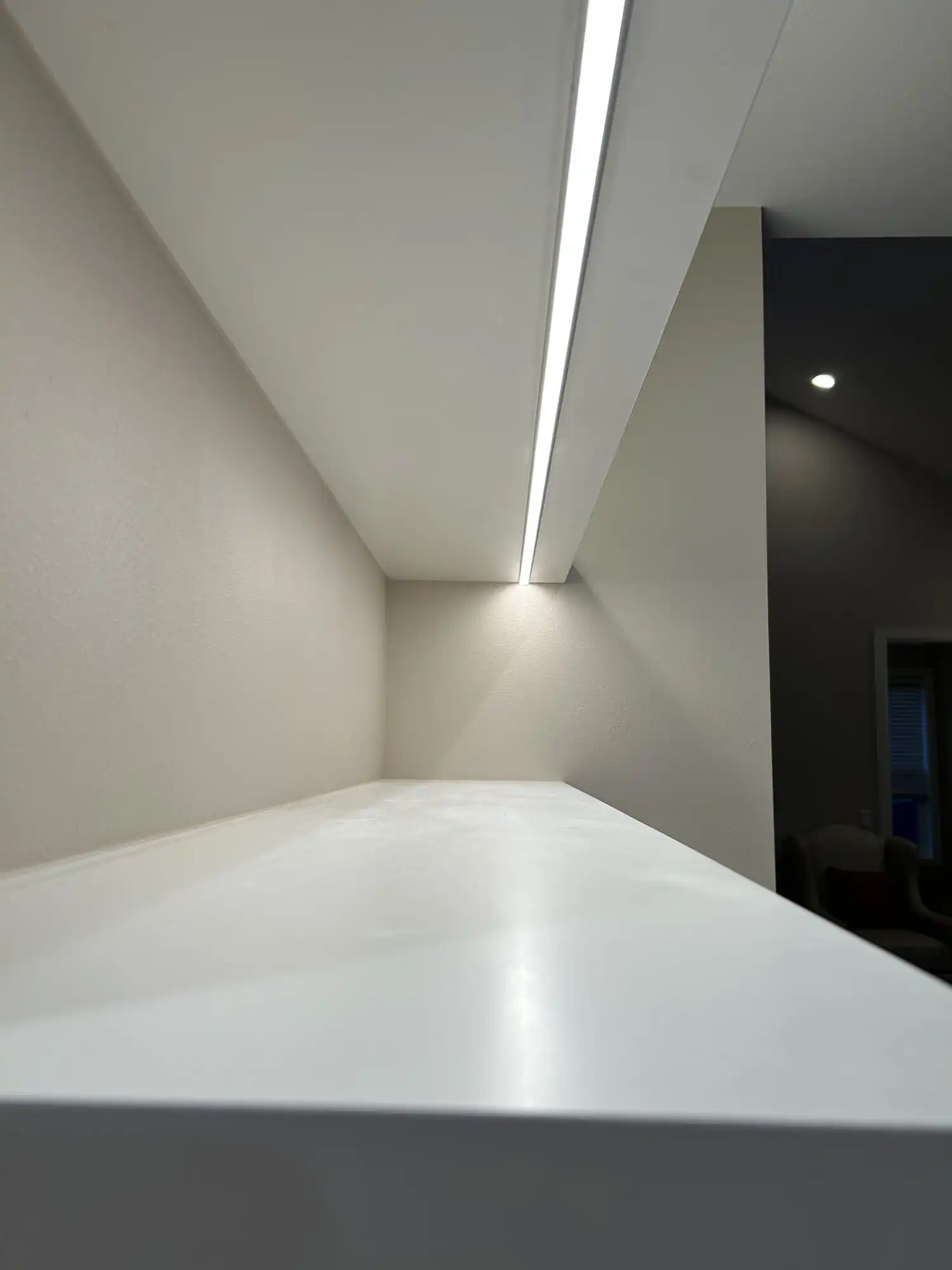
You should see the light, not the source. On a shelf that means setting the channel back from the front edge and aiming it down, so the strip is hidden from someone standing in the room and from someone sitting on the sofa. Half an inch of error and every shelf shows a bright bar across it. Sight lines get checked from both heights before the channel is routed.
The tray ceiling above the built-in
The wall is only half of it. The tray ceiling above carries LED bays, and a bay has to be laid out and fed before the ceiling, the crown and the millwork close. Each of those closes on another trade’s schedule. Added after the trim is on, a bay means cutting finished work.
What is not in these photos
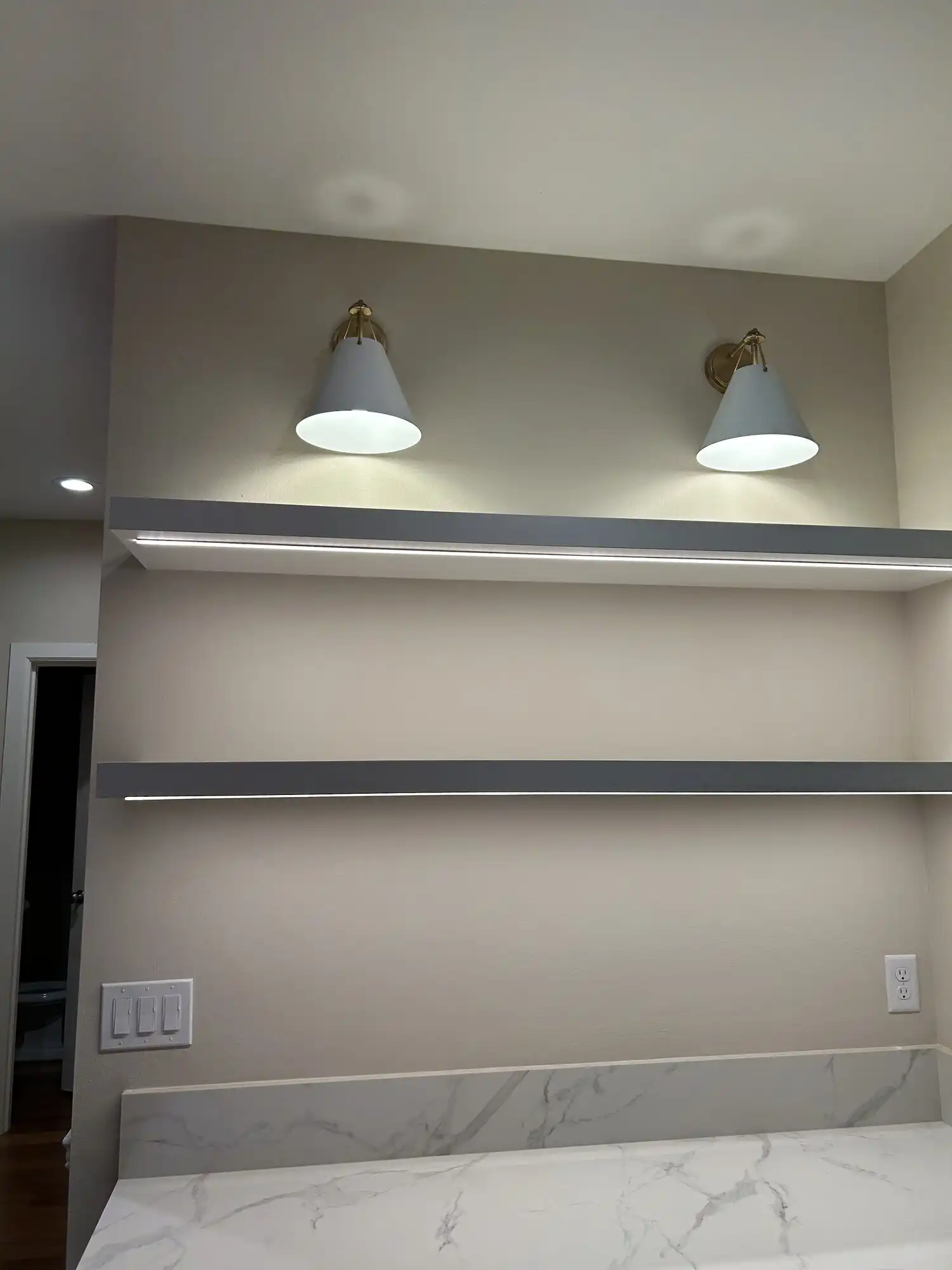
The tray-ceiling bays are not photographed lit. Both August–September frames show the shelving wall, and the two close-ups are from a separate Sammamish job in March 2026.
Photographs from this job
Common questions
Why does LED strip lighting look cheap in some built-ins and expensive in others?
Almost always the channel and the diffuser. Tape stuck to bare wood reads as a row of dots and throws a striped pattern on whatever is below it. Recessed aluminum channel with a frosted diffuser reads as a continuous line. The aluminum also acts as the heat sink that keeps the strip's color from drifting over a few years. At the short viewing distance of a shelf, tape density matters too: a denser LED spacing costs more per foot and is the difference between a lit shelf and a striped one.
Where should the LED drivers go?
Somewhere a hand can reach without a saw. Drivers fail long before the strips do, so they belong in a cabinet base, a closet, or an accessible ceiling bay, never sealed behind fixed millwork with the tape. Driver location has to be decided at rough-in, because that is when the low-voltage home runs get pulled and when the cabinetmaker still has the box open. A driver buried behind a finished panel turns a fifteen-minute swap into carpentry.
Do the LED strip, driver and dimmer have to be matched?
Yes. A driver, a dimmer and a strip that were not specified together will flicker, buzz, or drop out at the bottom of the dial. Each driver publishes a list of dimmers it has been tested with, and that list is checked before anything is ordered. Line-voltage dimmers on the driver's primary and low-voltage dimming on its output behave differently, and mixing the two approaches across one room is how you end up with shelves that dim at different rates.
Does built-in lighting need an electrical permit in Sammamish?
New branch circuits, switching and low-voltage runs for millwork lighting are permitted electrical work. Sammamish is one of the cities that issues and inspects its own electrical permits rather than passing it to Washington L&I, so the application and the inspection both go through the city. WAC 296-46B-901 puts the permit on the contractor, before work starts, not on the homeowner afterwards.
Shown with the customer’s permission. All location metadata has been removed from these files and no street address, unit number or identifiable person appears in them.
Have a job like this?
Call or text and you will reach the owner, not a call centre. For anything with a drawing, an equipment list or a deadline, send it through the quote form and you will get a written scope back.
We reply as soon as we are off the job — usually the same day.